
Efficient Resource Transport Using Trains in Factorio
Trains play a pivotal role in optimizing resource transport in Factorio, particularly as your factory grows and logistical needs become more complex. Below is a structured guide to leveraging trains effectively in your resource transport network.
—
Step 1: Planning Your Train Network
1.1 Base Layout
– Design your base layout with accessibility in mind, ensuring critical production areas (smelters, assembly lines) are situated close to train stations to minimize belt usage.
– Consider the distance for train travel and potential future expansions. Arranging your base in a centralized manner will facilitate smoother operations.
1.2 Resource Sourcing
– Identify and map out your resource sources such as iron, copper, coal, and oil.
– Plan train stations at these resource-rich locations to enable efficient pickup.
—
Step 2: Building the Railway Network
2.1 Railway Construction
– Start laying down tracks connecting your main base to mining outposts and between different stations. Use straight tracks for efficiency, and curves or intersections where necessary.
– Implement rail signals strategically to manage train traffic effectively, preventing collisions and ensuring safe operation.
2.2 Stations and Platforms
– Construct dedicated train stations at each outpost and in your main base.
– Ensure that each platform is long enough to accommodate the length of your trains; this includes considering future train expansions.
—
Step 3: Setting Up Train Schedules
3.1 Basic Scheduling
– Access the train GUI to set up basic schedules. Designate clear “loading” and “unloading” stations, ensuring that trains know where to collect resources and where to drop them off.
– Use simple timing schedules if your operations are straightforward.
3.2 Advanced Scheduling
– For complex logistics, use condition-based scheduling. Set up unique routes where trains only stop if certain conditions are met, such as specific stock levels at the stations.
—
Step 4: Automating Train Operations
4.1 Resource Sensing
– Utilize circuit networks to monitor resource levels at your stations. For instance, if iron ore at the main base drops below a pre-set threshold, a signal can activate a train to travel to the mining outpost.
4.2 Load and Unload Conditions
– Establish automatic loading and unloading conditions using filters on cargo wagons. This aids in categorizing different resources, ensuring accurate inventory management.
—
Step 5: Managing Multi-Resource Transport
5.1 Dedicated Trains
– Assign dedicated trains for individual resource types. This helps avoid cross-contamination of resources and ensures each train’s cargo is uniform and efficient.
5.2 Waiting Stations
– Implement waiting stations equipped with signals designated for each train type, allowing them to hold their position until notified to proceed.
—
Step 6: Maintaining and Upgrading Your Network
6.1 Efficiency Checks
– Regularly assess your train network for possible bottlenecks, such as over-traffic or delays at signals. Consider upgrading signals to more advanced versions to improve their efficacy.
– Increase track count or lane efficiency by adding more parallel tracks if necessary, especially as production ramps up.
6.2 Integration with Other Logistics
– Combine your train network with other logistical methods like belts or robots. This hybrid approach maximizes resource movement efficiency, utilizing the strengths of each transport type.
—
Example Setup
| Station Type | Function |
|———————-|—————————————————–|
| Loading Station | Loads resources (e.g., coal, iron) at mining outposts. |
| Unloading Station| Unloads resources at the main base close to production areas. |
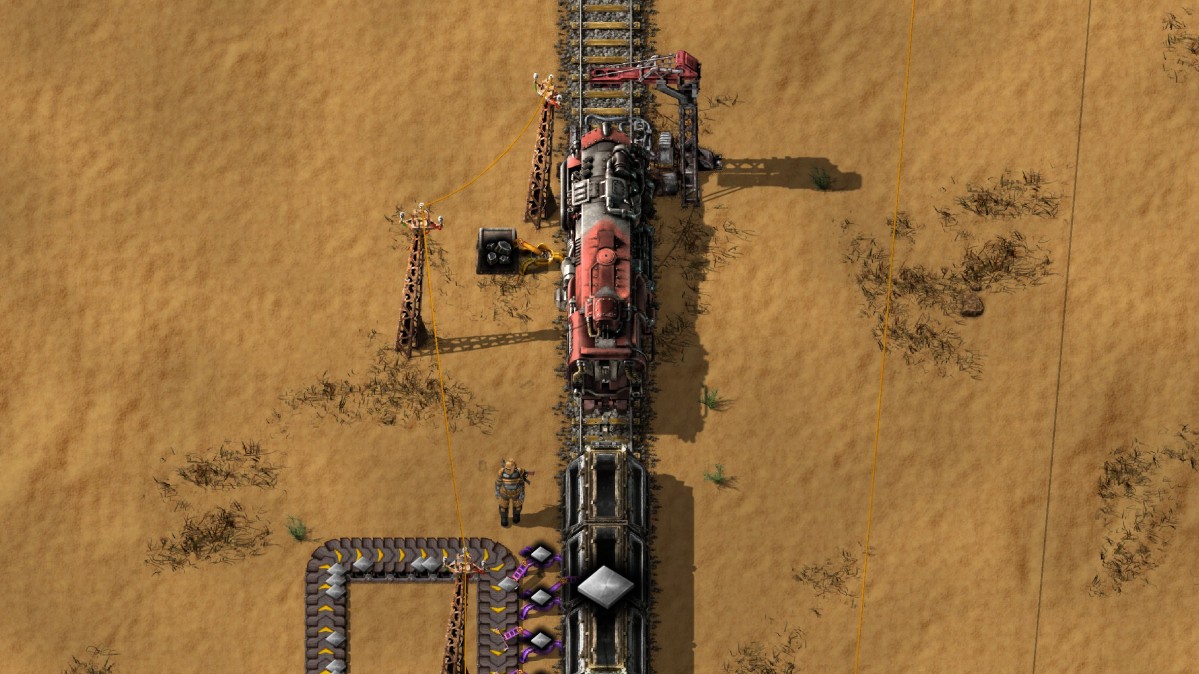
| Waiting Stations | Areas for trains to halt after unloading, awaiting further signals to proceed. |
—
Tips for Large-Scale Operations
1. Railway Expansion: If your production zones expand vertically or if you face obstacles, consider elevating tracks using ramps to maintain efficiency and enhance the visual appeal of your network.
2. Resource Balancing: Continuously monitor the flow of resources and the levels at storage locations. Adjust train schedules proactively to balance supply and demand, avoiding shortages or overstocking.
By implementing these strategies and principles, you can harness the full potential of trains in Factorio, establishing an efficient and scalable logistics network that will support your factory’s growth and resource management needs.


Leave a Reply