
Designing an efficient factory layout in Factorio is essential to enhance resource throughput and minimize potential bottlenecks. Here’s a comprehensive guide detailing various strategies for optimizing your factory design:
1. Resource Monitoring and Balancing
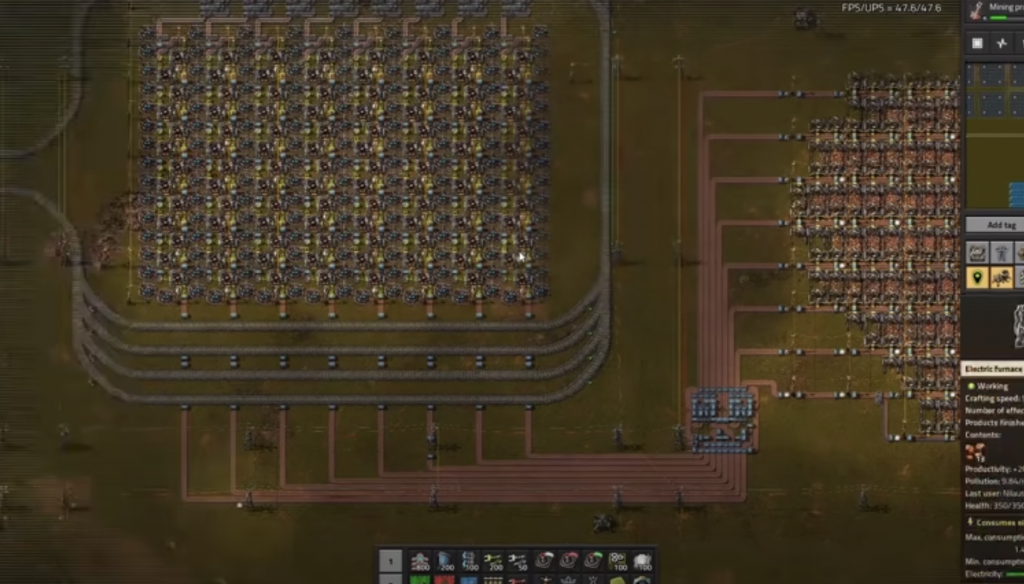
– Resource Management: Implement tracking systems using signals from mining drills to halt operations automatically when resources are depleted. This approach avoids wasting energy and keeping machines idling unnecessarily.
– Balancing Outputs: Ensure that the production of various resources aligns with demand. For instance, check the ratio between iron and copper, as a shortfall in one can disrupt the entire production process. Utilize combinators if necessary to maintain an optimal balance.
2. Efficient Belt Layout
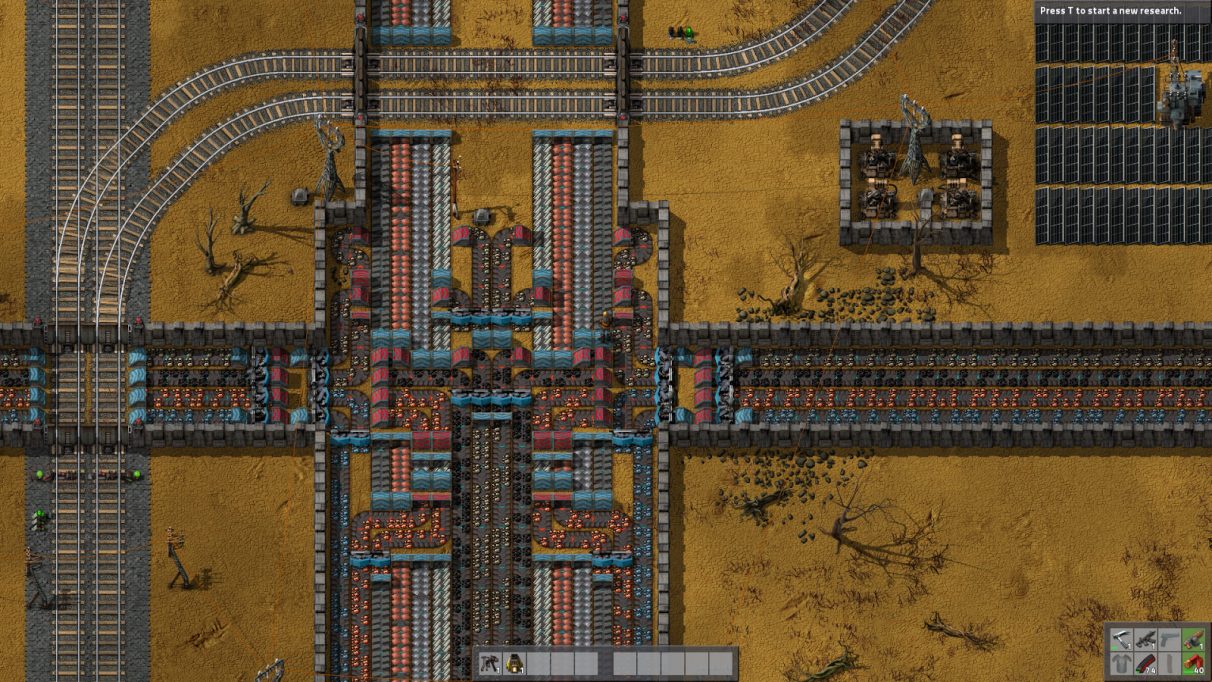
– Minimize Congestion: Plan your belt usage to avoid congestion. Incorporate splitters and mergers strategically to control the flow of resources. For instance, if a belt is nearing saturation, split its load and redirect some resources to alternate paths.
– Upgrade Belts: As your resource output increases, consider upgrading to faster belts like red or blue belts. This enhancement improves throughput and reduces the risk of backlogs.
3. Tileable Designs
– Scalability: Create modular setups that can be easily replicated. Designs should allow for seamless duplication in one direction, facilitating expansion when you scale up your factory.
– Expandability: Maintain adequate spacing within your layout to accommodate future expansions or alterations. This forward-thinking approach ensures that you can adapt to growing production needs without a complete redesign.
4. Station Management
– Train Stations: Optimize your train stations to minimize downtime. Arrange trains to remain parked without blocking transport routes, ensuring a continuous supply chain for loading and unloading resources efficiently.
– Cargo Management: Consider implementing buffer chests at stations to hold excess resources, thereby preventing train delays when unloading.
5. Advanced Techniques
– Beacons and Modules: Use beacon modules strategically to boost productivity. Place them near critical production areas to maximize their effect while keeping entity count lower, which aids in performance.
– Cheat Testing: Don’t hesitate to utilize cheat modes for testing theoretical layouts within a sandbox environment. This practice helps you validate designs without resource limitations before committing to them in your primary game.
6. Main Bus Design
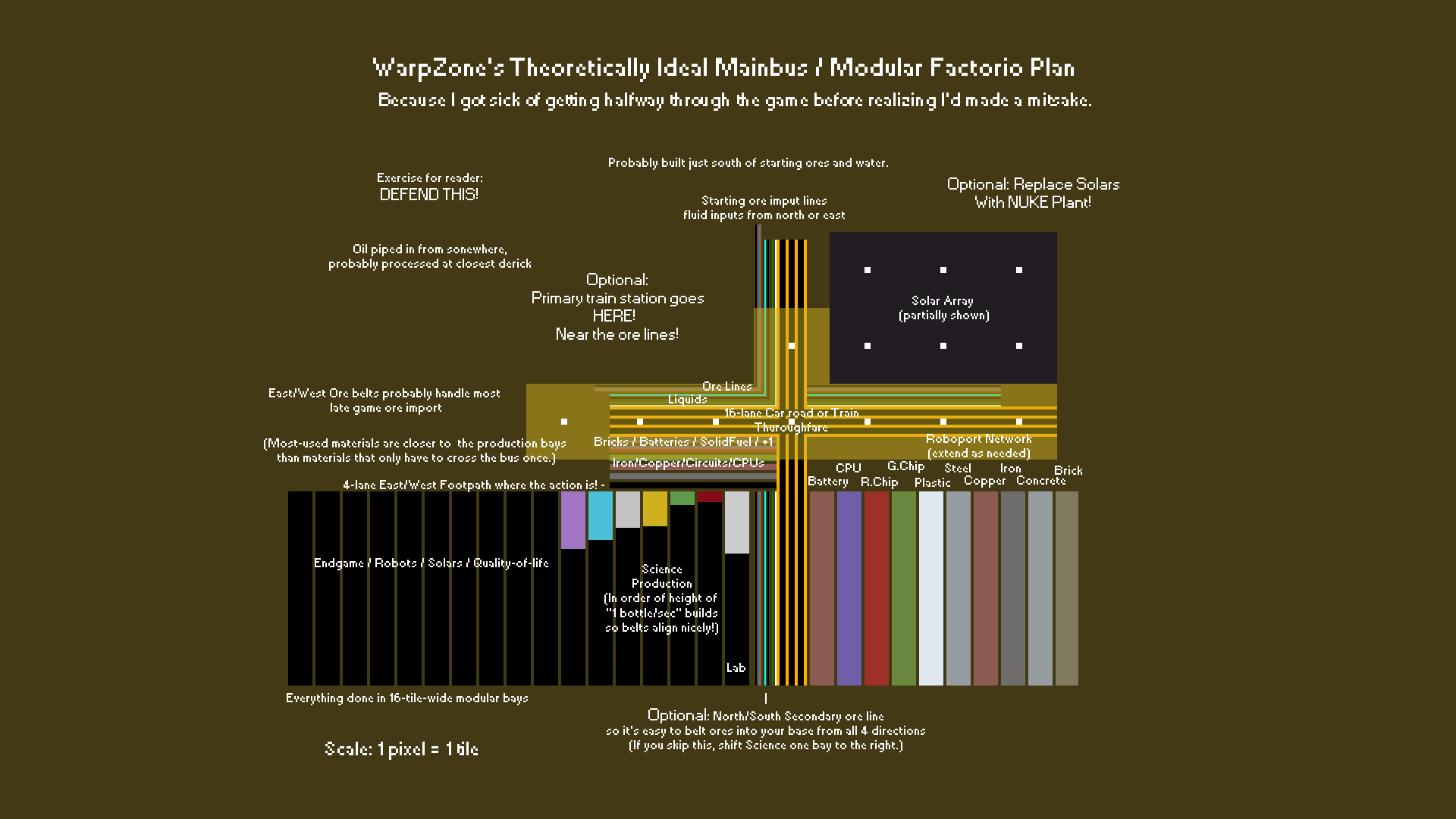
– Main Bus Principle: Adopt a main bus design to streamline resource distribution. This concept involves a primary belt running through your factory with branches leading off to different production areas, ensuring a constant supply of essential materials.
– Flexibility: Facilitate future changes and expansions by allowing adequate space between the main bus and production lines. This flexibility enables you to adjust resource allocation without needing a complete overhaul.
7. Lean Production
– Reduce Active Entities: Actively manage the number of machines operating at any given time. This means limiting idle machines, which not only optimizes energy use but also enhances performance since fewer active entities require less processing power.
– Direct Mining: Favor direct mining techniques wherever feasible. This reduces chokepoints and intermediaries between resource extraction and production lines, thereby streamlining the overall process.
Conclusion
By implementing these strategies, you can create a factory layout in Factorio that maximizes efficiency, scalability, and minimizes bottlenecks. A well-designed factory not only enhances gameplay but also boosts performance for extensive operations, allowing you to focus on developing exciting projects within the game.


Leave a Reply