
Designing a robust and efficient power grid in Factorio is essential for ensuring your factory operates smoothly across varying demands and day-night cycles. Here’s a comprehensive step-by-step guide to help you create a well-balanced power system.
Step 1: Determine Your Factory’s Power Needs
– Calculate Total Power Requirements: Begin by assessing all the machines in your factory. Sum up the power consumption of each piece of equipment, including:
– Furnaces (Electric Furnaces & Stone Furnaces)
– Assembly Machines (including specialized ones)
– Beacons and other auxiliary equipment
This total will serve as your baseline for power generation requirements.
Step 2: Choose Power Generation Methods
Solar Power
– Primary Source: Opt for solar panels, which are sustainable and do not consume resources following their initial setup.
– Optimal Ratio: For effective energy storage, maintain a ratio of about 0.84 accumulators per solar panel. A practical guideline is to use 20 accumulators for every 24 solar panels per megawatt (MW) of demand.
Alternative Power Sources
– Steam Power: If you have access to coal or other fuels, steam power plants provide reliable energy. However, they rely on resources that may be finite or require transportation.
– Nuclear Power: For extensive power needs, nuclear reactors can sustain large factories but come with complex setup and safety considerations.
Step 3: Plan Efficient Layouts
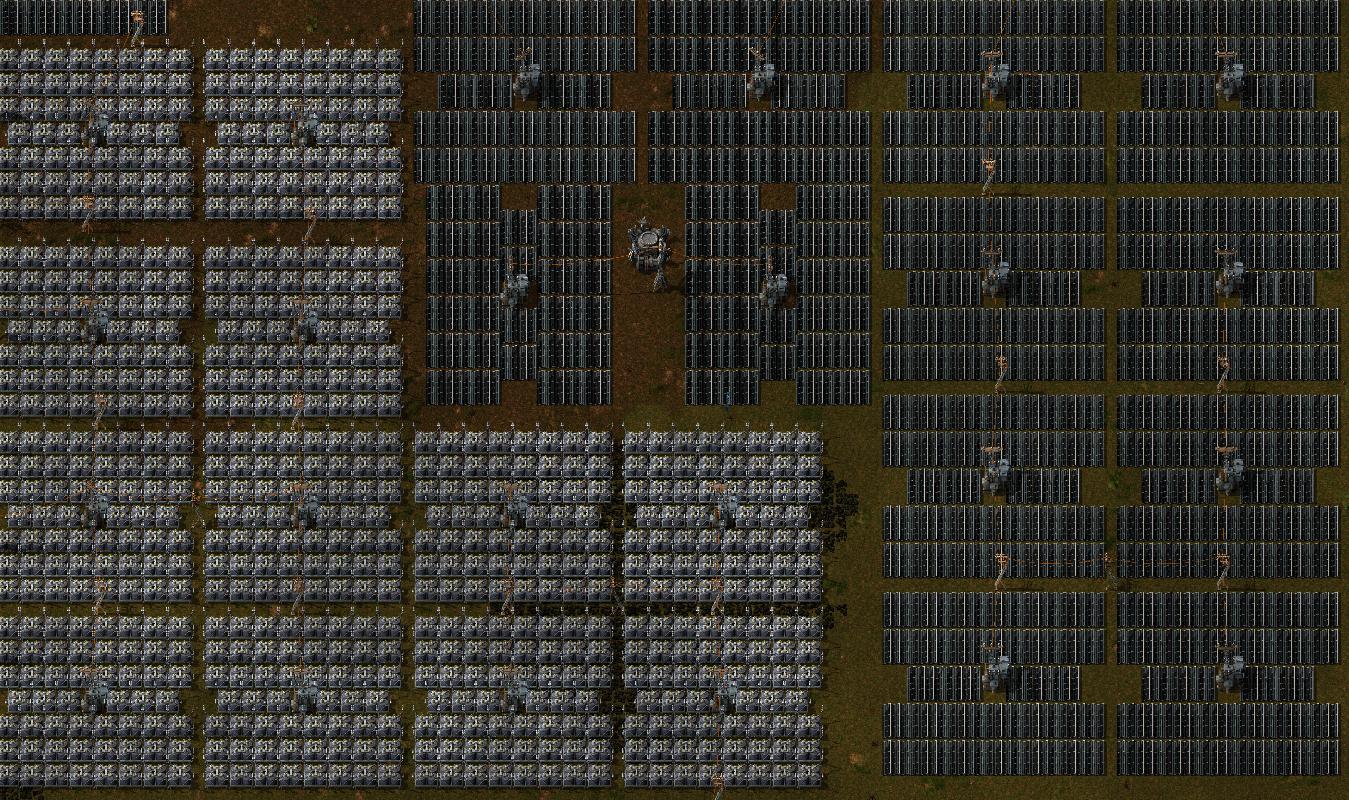
Solar Panel Arrays
– Grid Layout: Design your solar panel arrangements in a grid pattern, ensuring maximum efficiency without blocking other operational areas.
– Mirrored Layouts: Use mirrored designs to avoid unwanted asymmetries in your solar field.
Accumulator Placement
– Proximity: Position accumulators close to your solar panels to minimize cable length and reduce energy loss due to transmission.
– Aesthetic Balance: Aim for an organized appearance that still meets functional demands.
Step 4: Implement Power Management
– Connect Power Sources: Design a power grid that seamlessly integrates all your power generation methods and storage units.
– Use of Substations: Incorporate substations when necessary for managing high voltages and to decrease power loss over longer distances.
Step 5: Balance Production and Storage
– Day-Night Cycle Consideration: Ensure solar panels generate sufficient power during the day not only to meet peak consumption but also to adequately charge accumulators for nighttime operation.
– Buffer Strategy: Establish a buffer in your power storage to handle unexpected surges in demand or power generation disruptions.
Step 6: Monitor and Adjust
– Regular Monitoring: Keep an eye on your power grid’s performance to identify potential inefficiencies or bottlenecks.
– Scalable Design: As your factory expands, ensure your power generation and storage capabilities are scaled alongside the growth.
Step 7: Consider Using Mods (Optional)
– Use of Power Grid Mods: Explore mods such as “Power Grid Comb,” which can enhance your infrastructure management and improve your power setup aesthetics.
By meticulously following these steps, you’ll create a power grid that efficiently meets the energy demands of your factory, helping you maintain productivity and ensure sustainability as you progress through the game.

Leave a Reply