
Optimizing a factory layout in late-game Factorio is essential for maximizing throughput, especially when resources are spread out. This detailed guide outlines advanced strategies and best practices to enhance your factory’s efficiency while adapting to the challenges of late-game scenarios.
Key Optimization Strategies
1. Reduce Active Entities
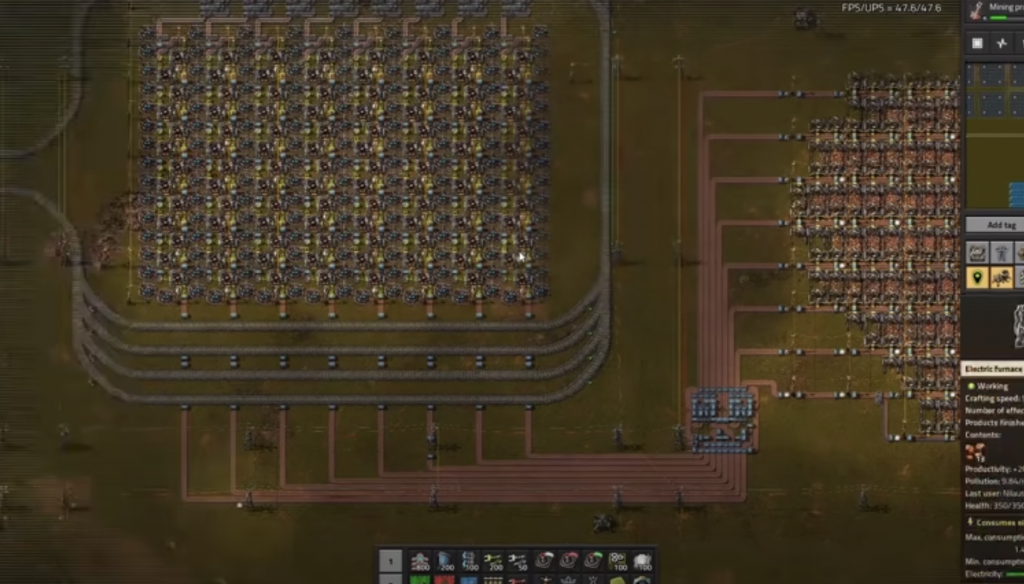
– Beacons and Modules: By integrating productivity and speed modules in assemblers and surrounding them with beacons, you can significantly amplify output from each building. This approach reduces the total number of active entities, such as miners and inserters, which in turn minimizes UPS impact and optimizes space usage.
– Direct Insertion: To streamline processes, aim for direct feeding between machines—feeding outputs from one assembler directly into the next. This cuts down on lag and unnecessary storage, improving overall workflow.
– Minimize Belt Usage: Especially in larger factories, consider alternatives to belts for transporting items. Implement direct loading into trains or use logistics robots where feasible to maintain high efficiency without the congestion that belts can cause.
2. Leverage Direct Mining Techniques
– High-Speed Miners: Utilize beaconed and moduled miners to achieve superior output rates. A well-configured miner can output more than 28 ore per second, reducing the necessity for multiple miners per mining patch.
– Direct Train Loading: Organize your mining operations so that they load ore directly into train wagons, efficiently transporting resources without intermediate belts or inserters—ideal for remote mining sites.
3. Modular and Scalable Blueprints
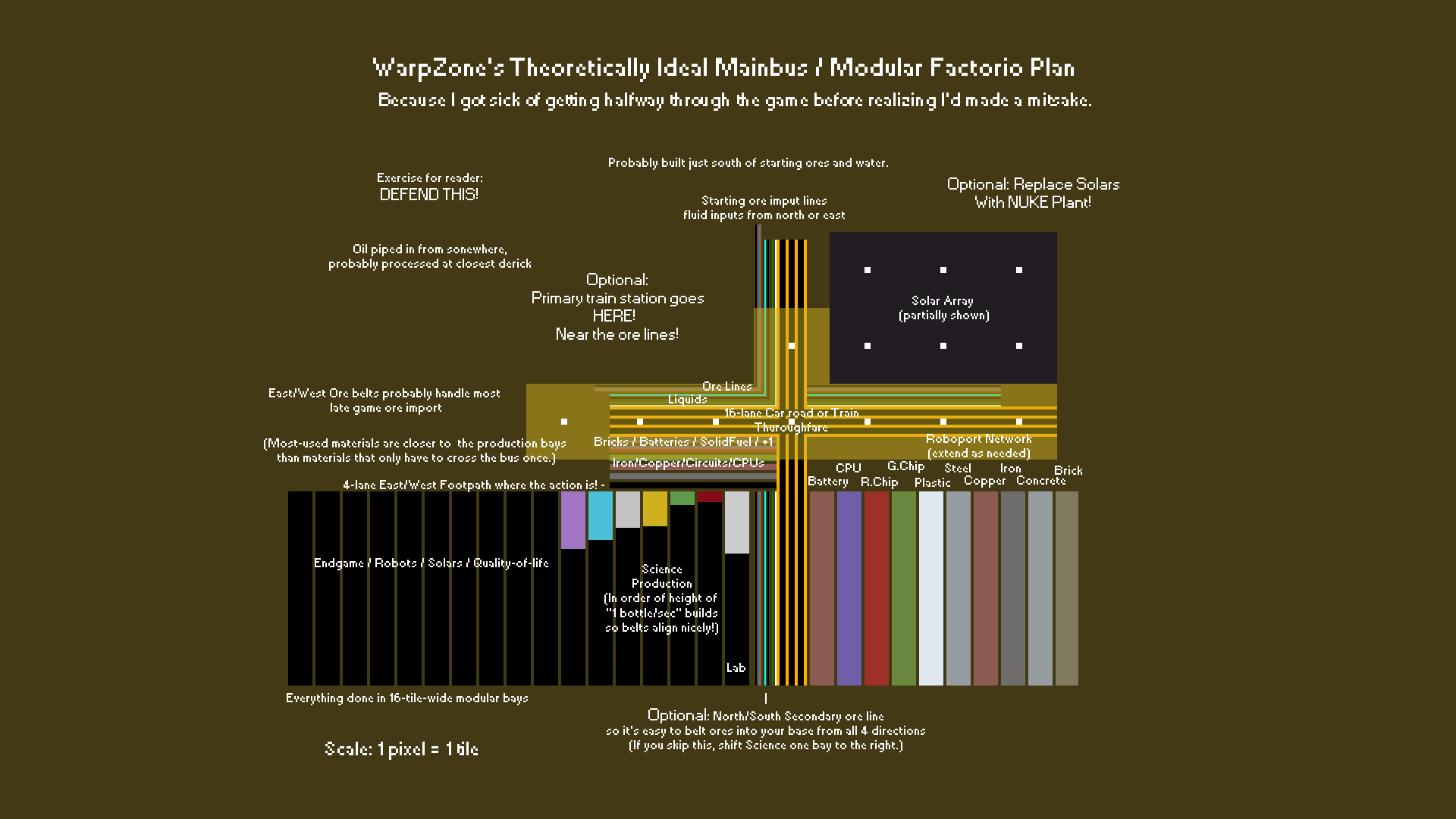
– Standardized Layouts: Design repeatable blueprints with unified input and output ports. This simplifies expansions and maintenance by allowing easy interconnection between different modules.
– Layered Design: Structure your factory vertically into distinct layers, such as mining, smelting, production, and research, with trains connecting the layers. This modular format enhances the scalability and organization of your factory.
4. Optimized Logistics Networks
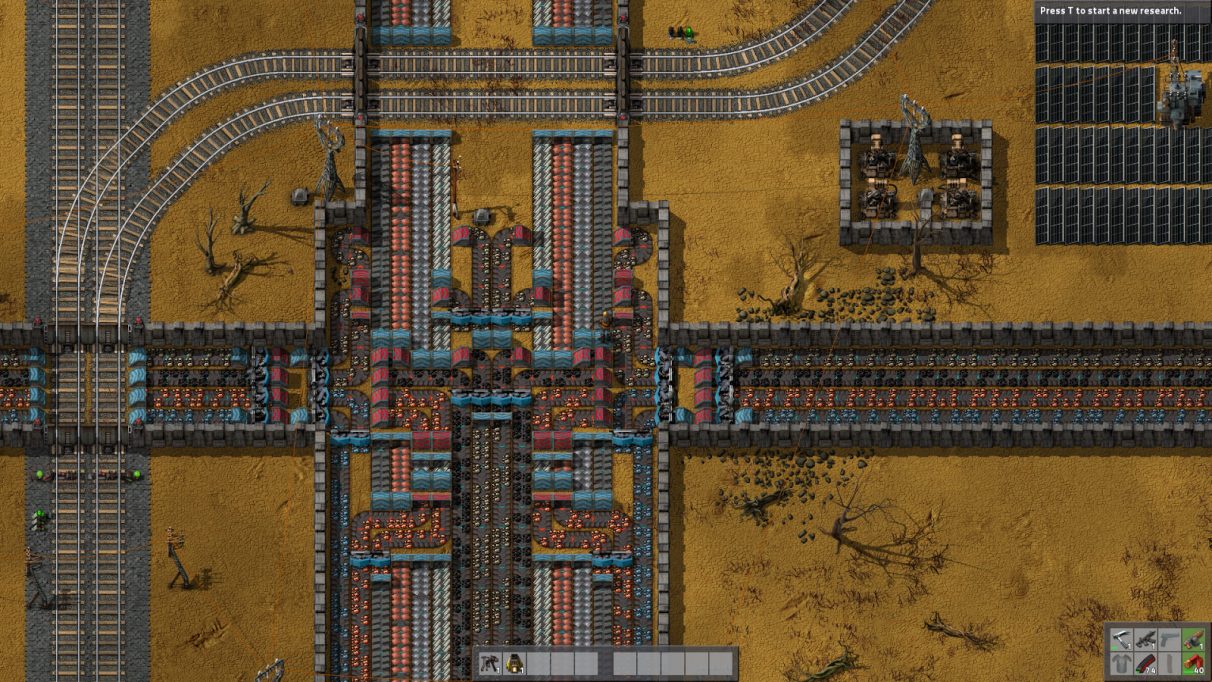
– Trains for Bulk Transport: Rely on trains to efficiently shuttle large quantities of resources across great distances. Design your rail networks strategically to avoid bottlenecks.
– Local Logistics Robots: Employ logistic bots in densely packed production areas to handle local item movements efficiently, providing flexibility in storage and transport.
– Avoid Stacking Belts: If necessary, utilize high-capacity belts and maintain brief routing distances. Balancing the item flow with balancers can prevent bottlenecks and keep operations smooth.
5. Efficient Smelting and Production
– Beaconed Smelting Arrays: Arrange your smelting setups in clusters, equipped with beacons and modules for optimal throughput. Ensure easy access to energy supplies and position outputs for convenient collection.
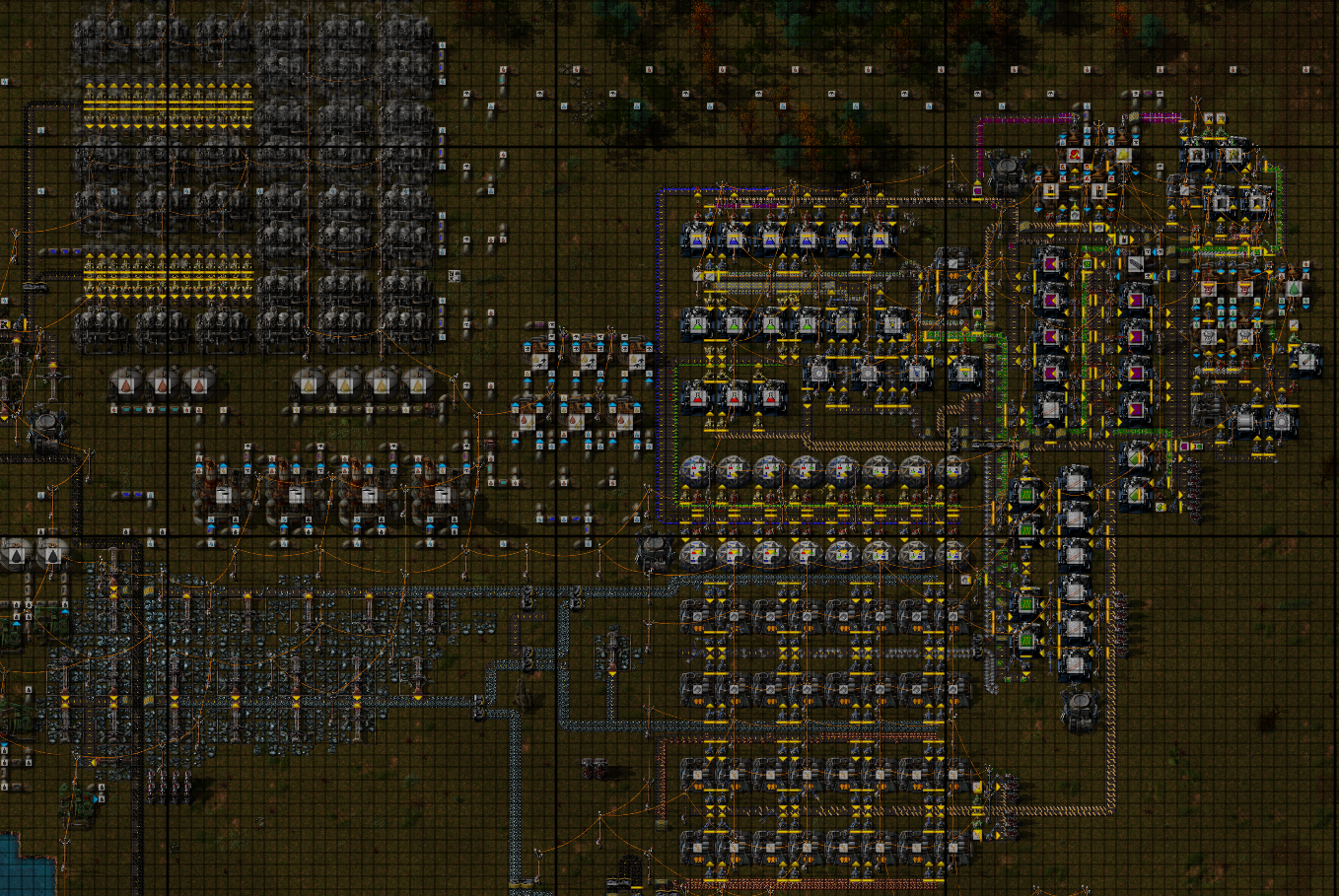
– Centralized Production Hubs: Focus high-demand production of essential items like circuits and plates in centralized locations, maximizing efficiency through beacon-induced enhancements.
6. Space Management and Expansion Planning
– Future Expansion Space: Always factor in additional space around production areas and rail lines when constructing blueprints for potential future expansions.
– Grid-Based Layouts: Align your factories in a grid format, facilitating easier future expansion and integration of new modules.
Advanced Optimization Techniques
– Automated Blueprint Design: Consider utilizing mods or tools that automate the blueprinting process, ideal for larger and more intricate factory designs.
– Multi-Stage Optimization: Break down factory design into stages—optimizing building placements first, followed by logistics routing, and concluding with throughput and spatial configurations.
– Balanced Throughput: Continuously monitor production chains using circuit networks or combinators to ensure optimal item flow, preventing any segment from becoming overwhelmed or starved of resources.
Summary Table: Late-Game Optimization Tactics
| Tactic | Description | Benefit |
|——————————-|—————————————————————–|——————————|
| Beacons & Modules | Boost output per building, reducing the need for multiple structures | Higher throughput, less lag |
| Direct Insertion | Insert items directly between machines, bypassing belts | Reduced congestion, increased speed |
| Direct-to-Train Mining | Enable miners to load ore directly into train wagons | Streamlined resource transport |
| Modular Blueprints | Create standardized, repeatable factory layouts | Simplified scaling, maintenance |
| Train Networks | Utilize trains for efficient bulk transport | Enhanced logistics efficiency |
| Bots for Local Logistics | Use logistics robots in high-density areas | Flexibility in logistics |
| Smelting/Production Hubs | Centralize production areas with optimal configurations | Maximized output |
| Automated Design Tools | Leverage automation scripts for optimal layouts | Saves time, improves efficiency |
Conclusion
The transition to late-game Factorio demands a sophisticated approach to factory design, emphasizing modular layouts, advanced logistics, and efficiency enhancements through beacons and direct insertions. By prioritizing scalability and strategic planning, you can ensure that your factory not only meets but exceeds the demands of a sprawling megabase, all while maintaining high throughput and minimal active entities. This comprehensive methodology will facilitate your factory’s growth and operational excellence as you progress through the game.
Leave a Reply