
Guide to Utilizing Combinators and Circuit Networks in Factorio
In the expansive world of Factorio, combinators and circuit networks emerge as powerful tools that enable players to streamline their factories through complex automation systems. Understanding how these elements work can significantly enhance your production efficiency. Here’s a comprehensive guide outlining the fundamentals, steps for implementation, advanced techniques, and examples of practical applications.
Understanding Combinators and Circuit Networks
– Combinators: These are devices that facilitate the creation of intricate logic circuits by manipulating signals in various ways. They come in two primary types:
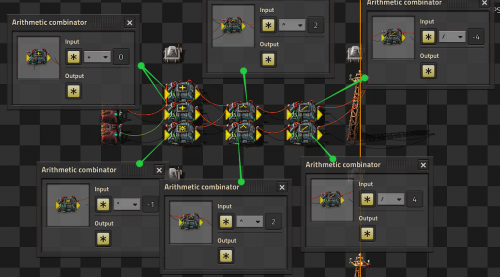
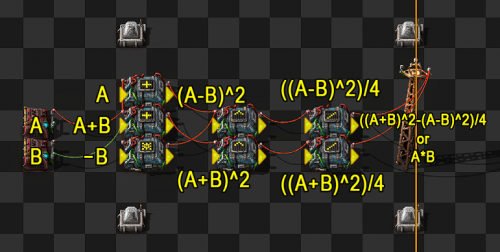
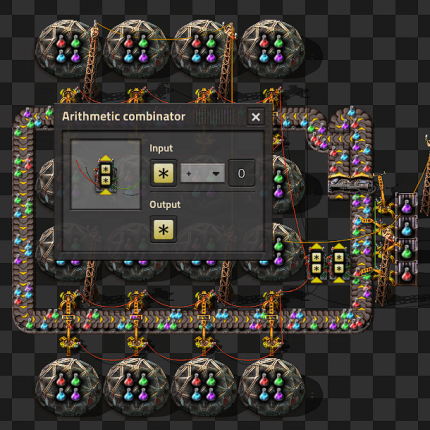
– Arithmetic Combinators: Perform arithmetic operations on input signals (addition, subtraction, multiplication, division).
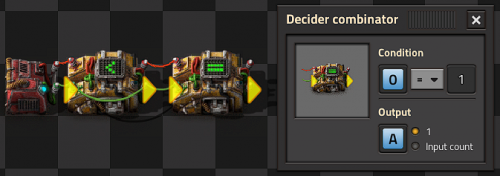
– Decider Combinators: Make logical decisions based on specific conditions (e.g., if a signal exceeds a threshold).
– Circuit Networks: This network enables communication between devices in Factorio using red and green wires to transmit signals. Such a system allows for the automation and optimization of various production processes within your factory.
Steps for Using Combinators and Circuit Networks
1. Build a Combinator:
– Place an Arithmetic or Decider Combinator in your factory to serve as the foundational logic element.
2. Connect to the Circuit Network:
– Use red and/or green wires to connect your combinator to other devices such as inserters, belts, or furnaces. This connection allows the transmission of signals throughout your circuit network.
3. Configure the Combinator:
– Set the combinator’s behavior by configuring its input/output settings. For example:
– An Arithmetic Combinator can be configured to add outputs from two input signals.
– A Decider Combinator can be set to trigger when certain conditions are met (e.g., an item count exceeds a specified number).
4. Design the Logic:
– Enhance the logic by using logic signals (such as A, B, C) or wildcards to specify how inputs interact. The Everything wildcard serves as a logical AND, while the Anything wildcard operates as a logical OR.
5. Connect the Output:
– Link the combinator’s output to other devices. This may enable/disable inserters, engage furnaces, or control various production lines based on the output signals from your combinators.
6. Test and Iterate:
– Run tests on your setup to verify correct functionality. Make adjustments to the wiring or logic as necessary to optimize performance and ensure reliability.
Advanced Techniques
– Signal Management: Optimize your circuit network by effectively managing different signal types. You can transmit multiple signals on the same wire without interference, facilitating more complex setups with fewer wires.
– Utilizing Logic Signals and Wildcards: Deepen your understanding of how logic signals and wildcards can be leveraged to create dynamic circuits that adapt to changing factory conditions.
– Extend Circuit Network Range: Utilize intermediate power poles to extend the reach of your circuit network, allowing for effective communication between distant devices.
Examples of Complex Systems
1. Inventory Management:
– Implement combinators to monitor inventory levels, triggering inserters to move items between storage and production as items cross a pre-defined threshold.
2. Production Control:
– Create production systems that dynamically adjust output rates based on resource availability or demand. Use Decider Combinators to monitor stock levels and inform machines to ramp production up or down.
3. Power Management:
– Design systems that optimize power usage by monitoring electricity levels. Combinators can control the activation of non-essential devices during low power scenarios, ensuring that crucial functions remain operational.
By mastering combinators and circuit networks, players can engineer highly efficient factories that respond dynamically to real-time changes in their environment, thus providing a richer and more engaging gameplay experience in Factorio.

Leave a Reply