
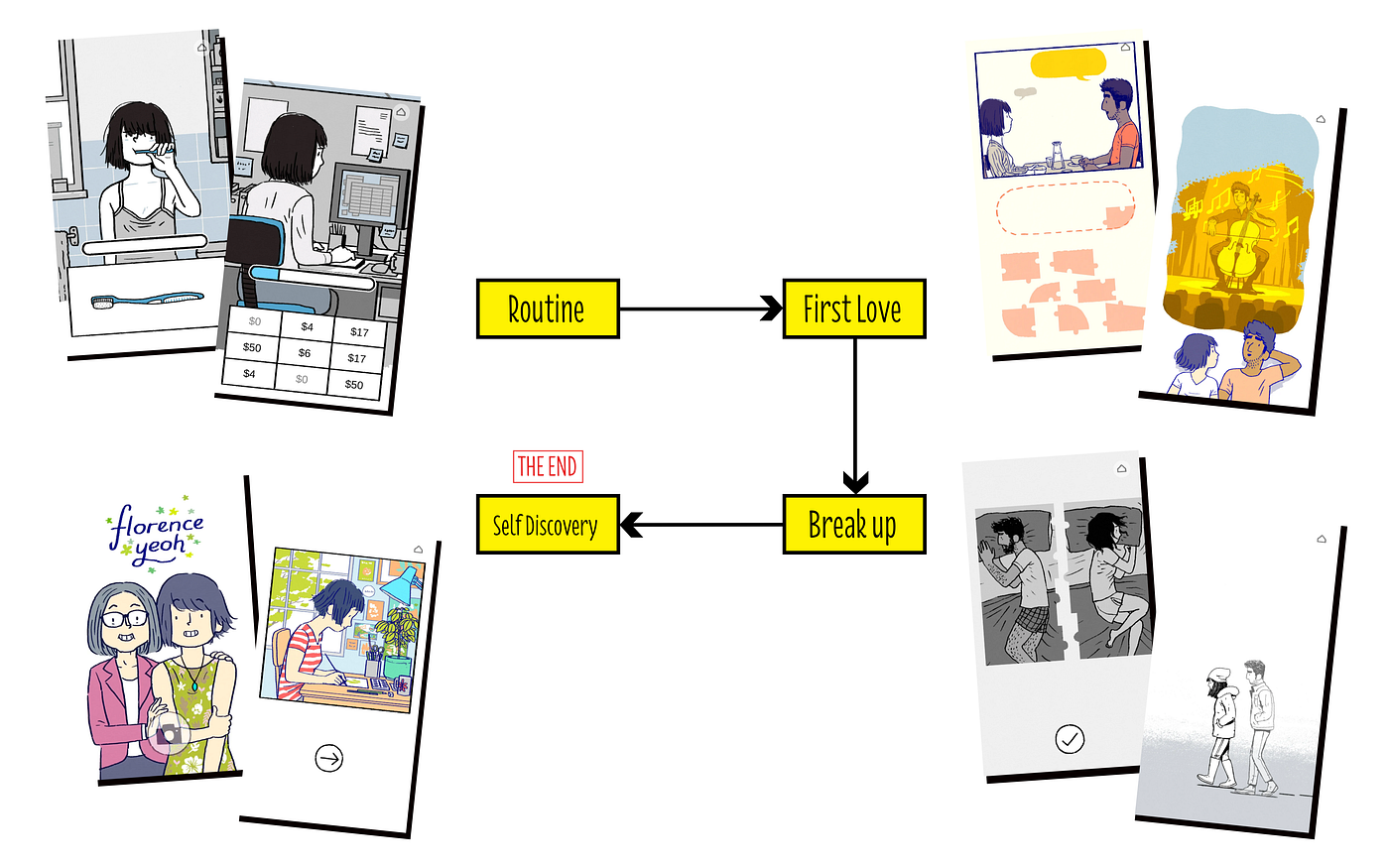
In Florence, the integration of gameplay mechanics with the emotional narrative adds a unique layer of depth to the storytelling. The use of interactive puzzle-like mechanics serves as a powerful metaphor for the protagonist Florence’s internal emotional journey. This approach emphasizes the game’s themes of communication, connection, and the struggle for emotional expression.
Puzzle Mechanics as Emotional Metaphors
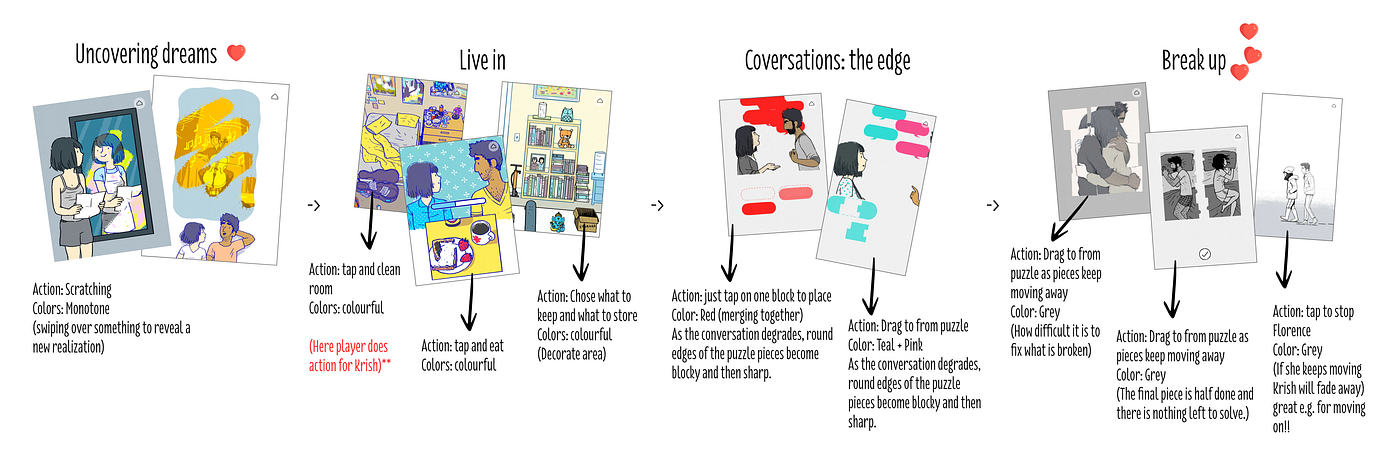
1. Speech Bubble Assembly: The act of piecing together speech bubbles is a direct representation of Florence’s difficulty in articulating her feelings, particularly in high-pressure situations such as a first date. Players are required to actively engage in the process of dragging and fitting puzzle pieces together, symbolizing Florence’s cognitive and emotional effort to find the right words. This tactile interaction mirrors the anxiety and nervousness she feels, inviting players to empathize with her struggle to communicate effectively.
2. Evolving Complexity: As Florence’s relationship with Krrish develops and she grows more comfortable, the mechanics evolve accordingly. The puzzles become easier to assemble, symbolizing her growing emotional confidence and the sense of ease that comes with established intimacy. In contrast, during moments of conflict or misunderstanding, the puzzles become increasingly complex and disjointed. This shift reflects the heightened tension and miscommunication that can occur in relationships, allowing players to experience the emotional turmoil through the game mechanics.
3. Post-Breakup Fragmentation: Following the breakup, the mechanics undergo a poignant transformation. The puzzle pieces begin to actively resist fitting together, moving apart even as players attempt to reassemble them. This design choice starkly encapsulates the feelings of fragmentation and loss associated with a breakup. The frustration experienced by players as they grapple with the pieces powerfully conveys the emotional pain and the recognition that some things cannot be repaired, enhancing the narrative impact of the game.
4. Emphasis on Inaction: Towards the end of the game, moments where the player is required to refrain from interaction signify acceptance and the gradual process of emotional healing. This deliberate contrast with earlier active puzzle-solving emphasizes the transition from struggle and frustration to the acceptance of loss. It reflects the idea that healing often involves letting go rather than forcing connections.
Conclusion
The puzzle mechanics in Florence transcend traditional gameplay by serving as a metaphorical bridge between the player’s actions and the narrative’s emotional core. Each interaction, whether it involves assembling pieces or confronting their disarray, resonates with the complexities of communication, connection, and heartache. This innovative use of gameplay allows for a deeply immersive experience that communicates profound emotional truths without relying solely on dialogue. Through Florence, players are invited not just to observe, but to actively participate in the emotional journey of the character, resulting in a poignant and memorable exploration of love and loss.

Leave a Reply