
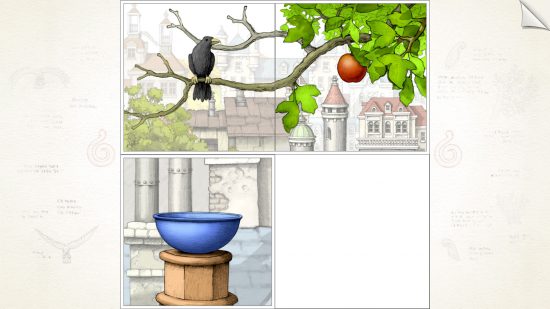
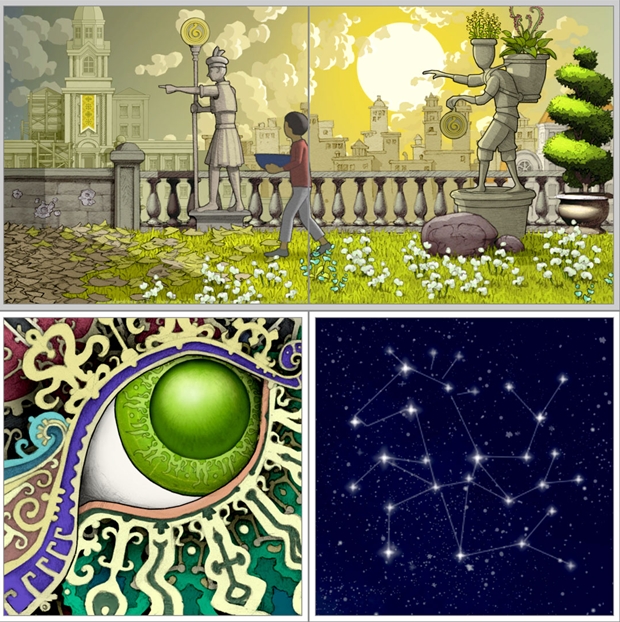
In Gorogoa, the narrative experience is ingeniously crafted to unfold primarily through the player’s engagement with its unique puzzle mechanics, steering clear of traditional methods such as dialogues or cutscenes. This design leverages a four-panel grid system, where each panel contains distinct image fragments that players can manipulate by rearranging, zooming into, or layering them. This interactive approach creates a visual tapestry that gradually unveils a non-linear and symbolically rich narrative.
At the heart of the story is a boy’s mystical journey, chronologically conveyed through the puzzles. As players solve these intricate challenges, they reveal the protagonist’s development, memories, and spiritual awakening. The narrative follows the boy through various stages of his life—from childhood through the trauma of war, into adulthood, and eventually old age—culminating in his quest for an ethereal being known as Gorogoa, a representation of something transcendent and enigmatic within his existence.
Several key narrative elements stand out within the game’s structure:
1. Non-verbal Storytelling: By eschewing dialogue and text, Gorogoa relies solely on visual narratives embedded within the puzzle mechanics. This allows players to naturally uncover the story as they connect scenes and imagery, creating an immersive experience that encourages exploration and interpretation.
2. Fragmented Time and Memory: The spatial and temporal fragmentation of images across the four panels encourages players to ponder different moments and perspectives, emphasizing the non-linear nature of time. For instance, memories from childhood can influence decisions made in later scenes, suggesting a cyclical relationship between past and future that reflects the complex nature of memory.
3. The Boy’s Life Journey: Through problem-solving, we witness the boy’s progression—first through the struggles associated with childhood trauma and later toward recovery, reflection, and acceptance in his elder years. The final scenes combine previously disjointed elements, signifying a complete understanding and a moment of acceptance as he embraces the presence of Gorogoa.
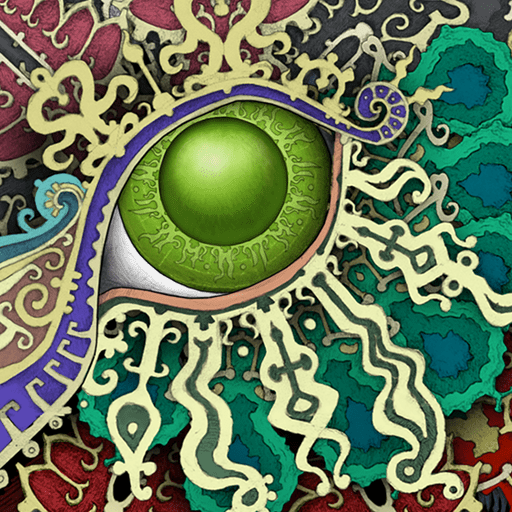
4. Symbolic Visual Motifs: Throughout the game, recurring motifs—such as fruit, eyes, and architectural structures—serve not only as puzzle elements but also as symbols that enrich the narrative. By merging these motifs in various configurations to solve puzzles, players unlock multifaceted meanings that resonate with the boy’s internal journey and the broader, mystical themes of the game.
In conclusion, Gorogoa masterfully intertwines gameplay and storytelling by using its visual puzzles as narrative vehicles. The exploration of the boy’s life, memories, and spiritual quest is organically woven into the player’s experience, transforming puzzle-solving into a profound method for revealing a rich, poetic narrative without the need for words. This innovative approach not only captivates players but also invites them to engage with the story at a deeper, more personal level.

Leave a Reply