
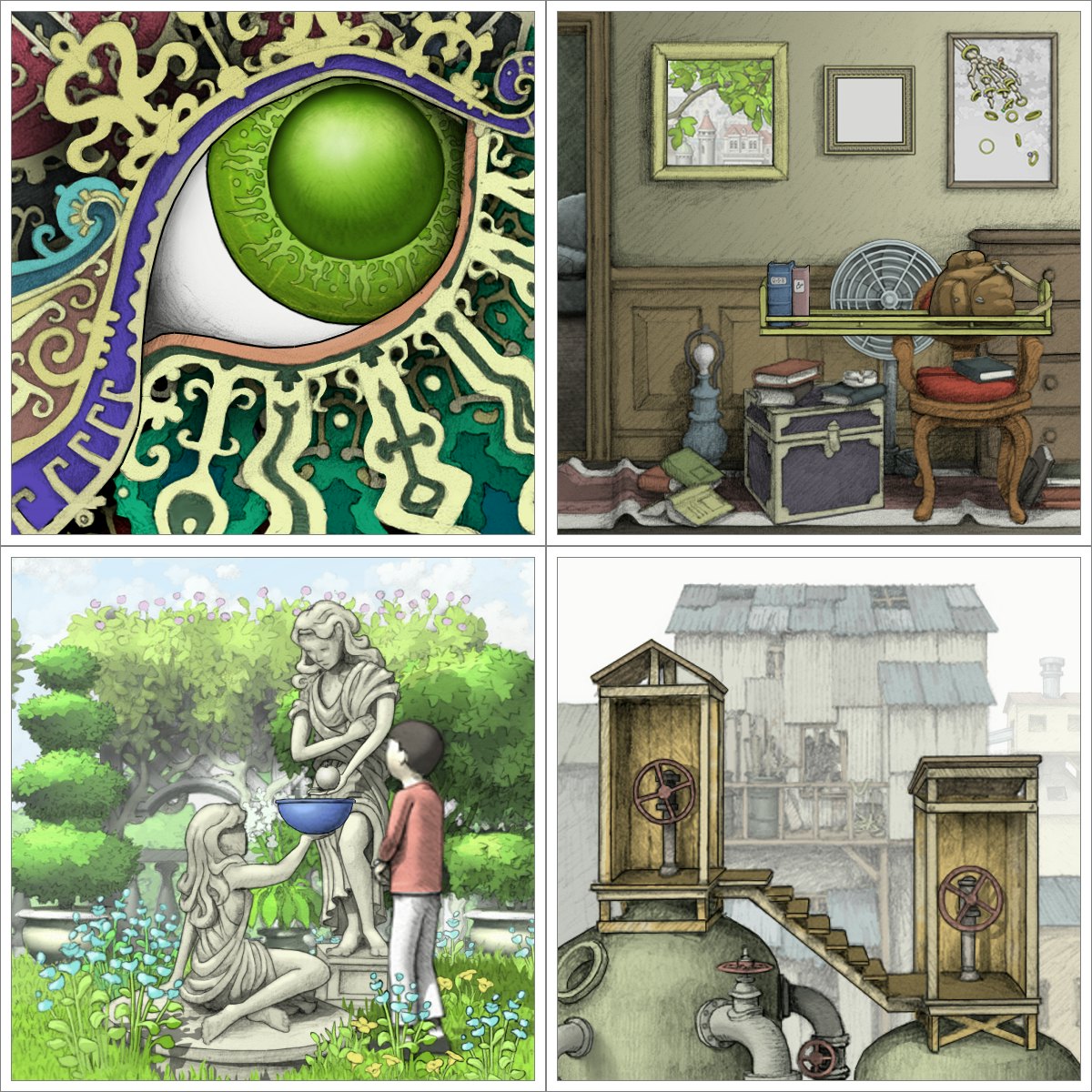
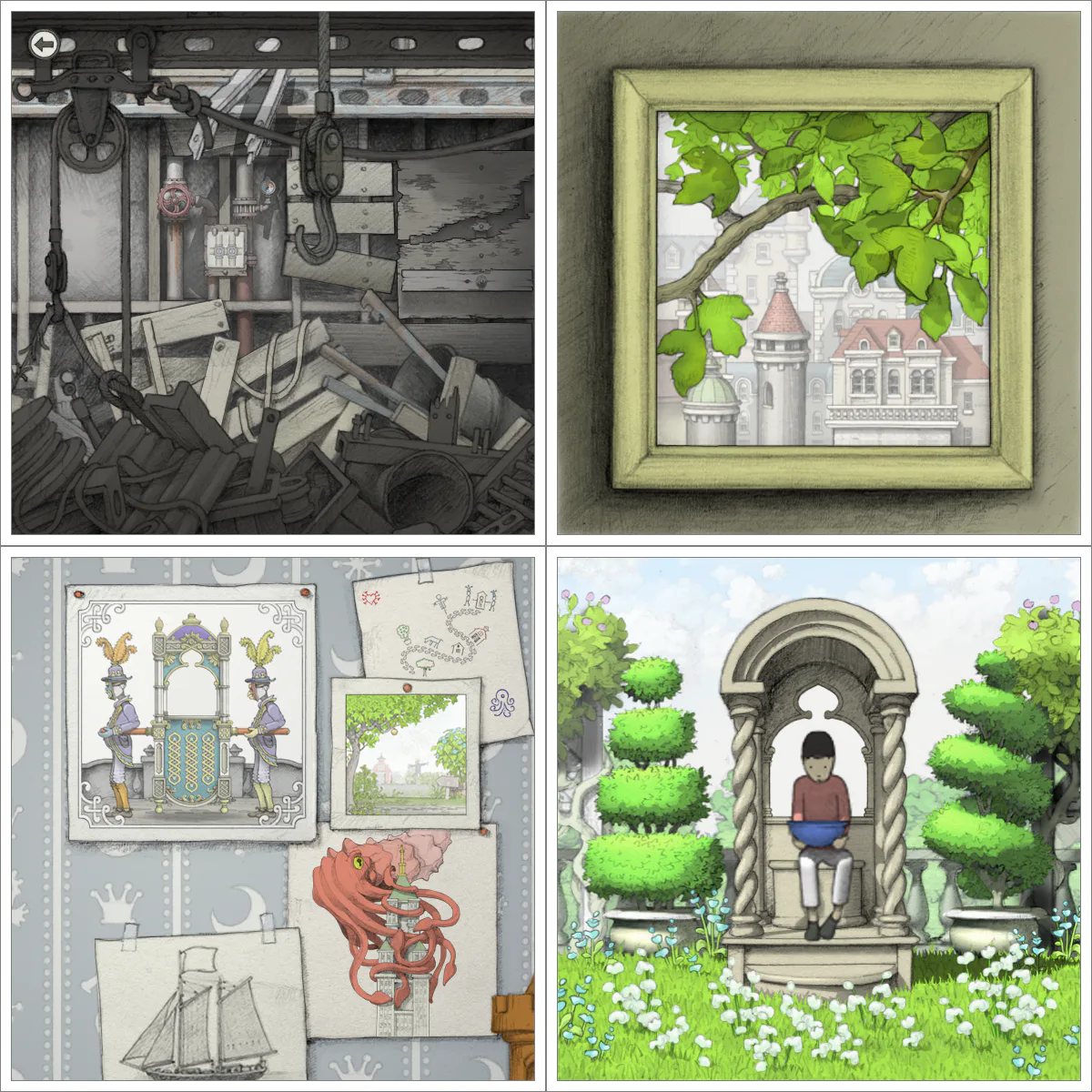
In Gorogoa, the innovative use of visual cues significantly enhances the puzzle-solving experience, allowing players to engage deeply with its intricate narrative and beautiful artwork. Here is a detailed exploration of how these visual connections facilitate gameplay:
Visual Cues for Panel Connections
1. Matching Architectural Elements
– Doors and Windows: Essential to the gameplay, doors and windows act as gateways between different panels. Players can drag these elements across panels, enabling characters to traverse various scenes seamlessly. This not only aids progression but also encourages exploration, as players discover how different environments are interconnected.
– Architectural Features: Consistent architectural details, such as roofs, staircases, and arches, provide a visual language that helps form a cohesive world. Aligning these features across panels creates a sense of continuity and immersion, reinforcing the idea that all the panels exist within a single, expansive environment.
2. Natural Elements
– Trees: Trees often appear in several panels, encouraging players to interact with different parts of them. By zooming into certain sections or shifting perspective, players can uncover larger images or hidden elements that serve as crucial components for solving puzzles. This connection emphasizes the natural progression and transformation throughout the game.
3. Patterns and Symbols
– Repeated Patterns: Patterns or symbols that recur across different panels often indicate potential connections or solutions. Players can manipulate these elements to unlock new pathways or reveal hidden objects, requiring them to recognize and utilize the visual cues strategically.
– Visual Acrostics: Many elements are designed with dual meanings, meaning that a single object can signify different things across various contexts. For instance, parts of a train map might also represent aspects of another object in a different reality, prompting players to think abstractly and draw connections that are not immediately obvious.
4. Aligning Objects and Scenes
– Zooming and Shifting: The mechanics of zooming in on objects and shifting panels allow players to align elements precisely. This capability is crucial when working with books, tables, or other items that serve multiple narrative functions. Such interactions foster a tactile experience, as players engage with the game’s world and reshape their understanding through physical movement of the panels.
5. Environmental Clues
– Banners and Other Visual Indicators: Certain environmental elements, like ornate banners or distinctive details within a scene, serve as visual hints. They guide players in connecting panels, often pointing toward the next logical step or hidden pathways. These features enrich the visual storytelling and provide subtle navigation cues for players to follow.
Conclusion
The variety of visual cues in Gorogoa not only adds depth to the puzzle elements but also encourages creative problem-solving. By requiring players to explore and manipulate the environment in novel ways, the game transforms traditional puzzle mechanics into an art form, celebrating both visual ingenuity and narrative depth. As players experiment with different alignments and connections across panels, they become active participants in unraveling the rich tapestry of the game’s story.
/cdn.vox-cdn.com/uploads/chorus_asset/file/9865563/Gorogoa_Final_7_preview.png)


Leave a Reply