
In Gris, the integration of sound and visual cues forms a cornerstone of its gameplay design, creating an environment where players can intuitively navigate puzzles, platforming challenges, and significant narrative moments. The intricate weave of these sensory elements enhances the player’s emotional engagement and shapes the overall experience.
Use of Sound Cues
Ambient and Musical Indicators
Gris employs a dynamic musical score that evolves in response to the emotional landscape and gameplay states. The sound design consists of various layers that communicate different conditions within the game:
– Safe Environments: A gentle, melodic piano piece often accompanies calm, safe sections, creating a soothing atmosphere and allowing players to explore without immediate threat.
– Threat Detection: Conversely, ominous organ tones signal the onset of danger, most notably during storm sequences. This auditory cue trains players to recognize danger even before visual threats become apparent, enabling strategic preparations for incoming hazards [1].
– Feedback Through Sound Effects: The game enhances player immersion with sound effects representative of the environment—such as the pitter-patter of rain and the crashing of waves. These auditory signals inform players of their interactions with the world, providing tangible feedback upon completing puzzles or progressing through levels [3].
Diegetic and Non-Diegetic Clues
Sound cues in Gris also include both diegetic (existing within the game’s world) and non-diegetic (external to the game’s narrative but assisting player experience) elements:
– Diegetic Clues: Certain puzzles incorporate sounds that function as clues. The ringing of bells when interacting with specific objects, or the calls of birds providing hints for timing jumps, enhance the player’s understanding of gameplay mechanics [5].
– Environmental Sounds: The rustling of leaves or mechanical sounds often hint at potential interactions or puzzle solutions that players might otherwise overlook [3].
Use of Visual Cues
Environmental Interaction
Visual cues are prevalent throughout the game, serving as essential guides for player navigation:
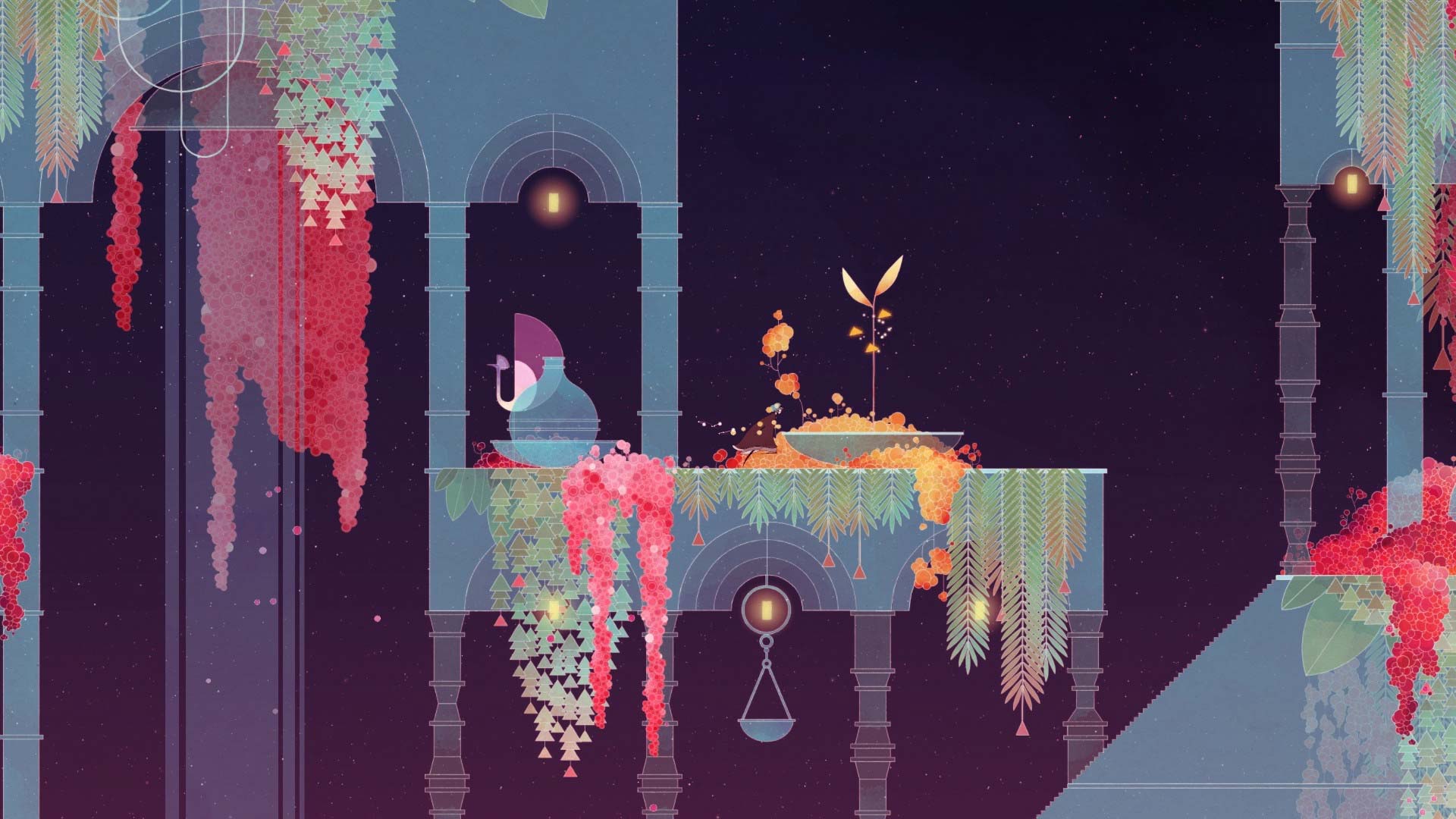
– Collectibles and Path Creation: Stars and other collectible items serve as indicators that lead to new paths or reveal hidden areas, motivating players to explore and experiment [2][3].
– Color as Dialogue: The use of color transformation as players progress marks the acquisition of new abilities tied to specific mechanics or emotional states. This visual progression not only represents character growth but also signals new gameplay opportunities [5].
– Interactive Animations: Visual feedback is immediate—animations such as birds taking flight or bells ringing when touched clearly indicate interactive elements or trigger puzzles [5].
Platforming and Puzzle Triggers
Visual cues further guide players through platforming and puzzle-solving:
– Danger and Safety Indicators: Specific visual elements, like swirling gusts of wind or animated particles, serve as warnings during perilous moments, aligning with the earlier-established musical cues to create a cohesive experience [1][5].
– Feedback on Abilities: The game’s unique abilities, such as the “Heavy” mechanic, are illustrated through character movements and environmental responses, providing clear confirmation of player actions [5].
– Stylized Environment Changes: In emotionally charged sections, such as underwater moments or themes of depression, the visuals shift dramatically to reflect a change in gameplay pace or mechanics, signaling the player’s need for altered approaches to puzzle-solving [5].
Integration and Impact
The integration of sound and visual cues in Gris creates an immersive and engaging gameplay experience that feels intuitive. The game effectively layers auditory and visual signals to communicate important information, making the challenges accessible while ensuring that emotional depth is not sacrificed. Transitional cues, such as the prelude of organ music before a storm, empower players to prepare for obstacles both psychologically and strategically [1][3][5].
Conclusion
In summary, Gris utilizes sound and visual cues not as mere embellishments but as integral aspects of gameplay and storytelling. These elements work in tandem to enhance player experience, offering seamless feedback and fostering a rich, sensory journey through the game’s emotional and mechanical landscapes. This thoughtful design approach invites players to engage deeply with the environment and narrative, creating a profound sense of connection and understanding as they progress.



Leave a Reply