
In Hellblade: Senua’s Sacrifice, the implementation of perception puzzles plays a significant role in gameplay and storytelling, tying directly to the protagonist’s psychological journey. These puzzles are not merely mechanical challenges; they serve as a means of expressing Senua’s experience with mental illness and her unique way of interacting with the world around her.
Mechanic Breakdown:
1. Initial Encounter:
– The player encounters a door that features a distinct red glyph, rune, or symbolic image. This serves as the focal point for the puzzle.
2. Symbol Discovery:
– To unlock the door, the player must seek out two hidden symbols. These symbols are ingeniously camouflaged within the game’s environment, blending with natural landscapes or architectural structures. They challenge the player to look at their surroundings in innovative ways.
3. Perspective Alignment:
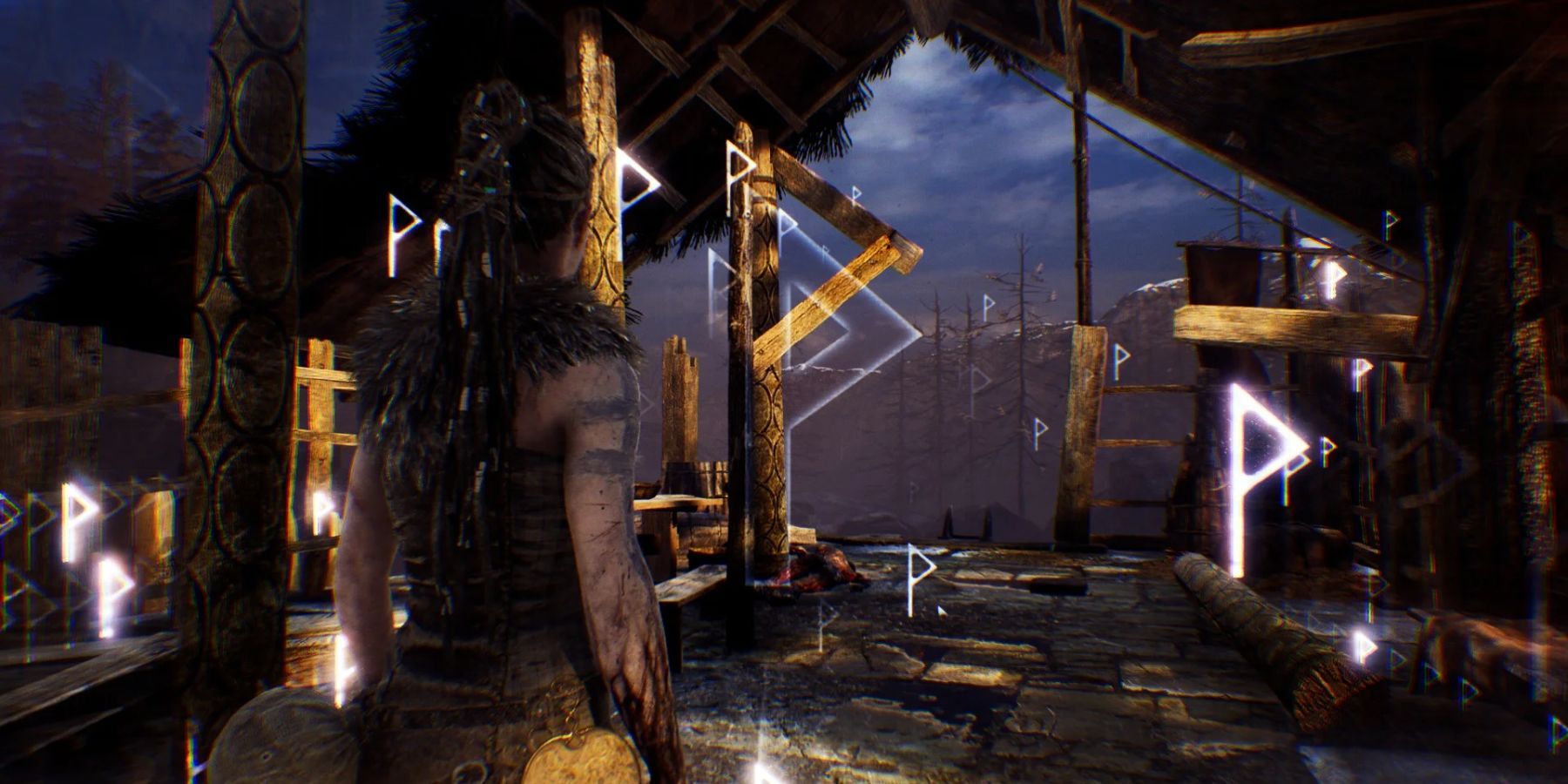
– The core of the puzzle involves moving Senua to specific vantage points and carefully adjusting the camera. Effectively, players must engage in a dance of observation, shifting angles until disparate elements coalesce into the desired symbol. This requires patience, keen observation, and spatial awareness.
4. Unlocking Progression:
– When the symbols are aligned correctly, they materialize, and the door or gate unlocks, allowing Senua to advance. This instant satisfaction of observing a previously hidden shape can evoke a sense of accomplishment akin to discovering a hidden truth about oneself.
Narrative Integration:
These perception puzzles are deeply intertwined with the themes of the game, particularly the concept of pareidolia—the tendency to perceive familiar shapes (like faces or symbols) in random stimuli. This mirrors Senua’s struggles with psychosis, emphasizing her altered perception of reality. The act of piecing together symbols reflects her journey of making sense of her troubled mind and understanding the chaos in her life.
Other Types of Puzzles:
In addition to the primary perception puzzles, Hellblade features several other challenge types that expand on the themes of perception and observation:
– Repairing Objects:
– Players align glass shards floating in the air to restore broken items. This activity further emphasizes clarity and coherence amidst fragmentation—symbolic of Senua’s quest for healing.
– Illusions:
– These puzzles often involve walking through gates or interacting with the environment in such a way that drastically alters the player’s perception. This mechanic enhances the idea that reality is subjective and can change based on perspective.
– Labyrinth Challenge:
– A later segment of the game presents a labyrinth that tests navigation skills and understanding of space. The endless maze symbolizes the complexity of Senua’s mind, representing her struggle to find her way through confusion and fear.
Conclusion:
Overall, the perception puzzles in Hellblade: Senua’s Sacrifice are meticulously designed to engage players in a way that reflects Senua’s internal conflicts. By requiring observational precision and perspective shifts, these challenges reinforce the narrative themes of perception and mental health, creating an immersive and thought-provoking experience that goes beyond traditional gaming mechanics.



Leave a Reply