
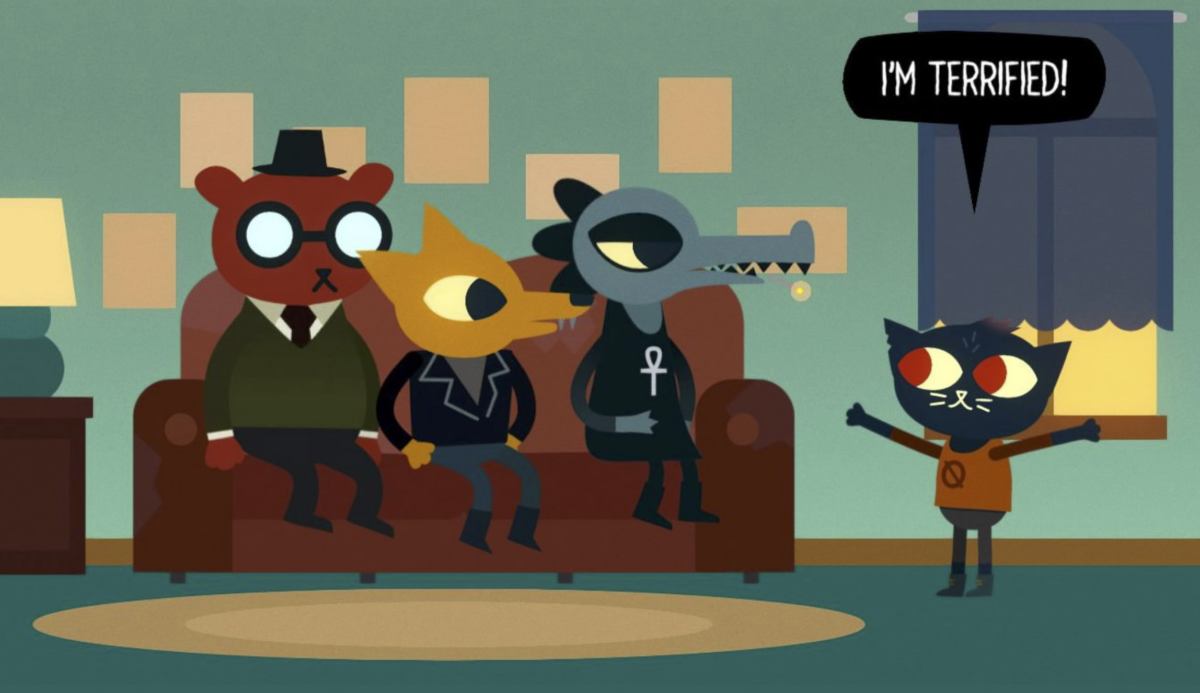
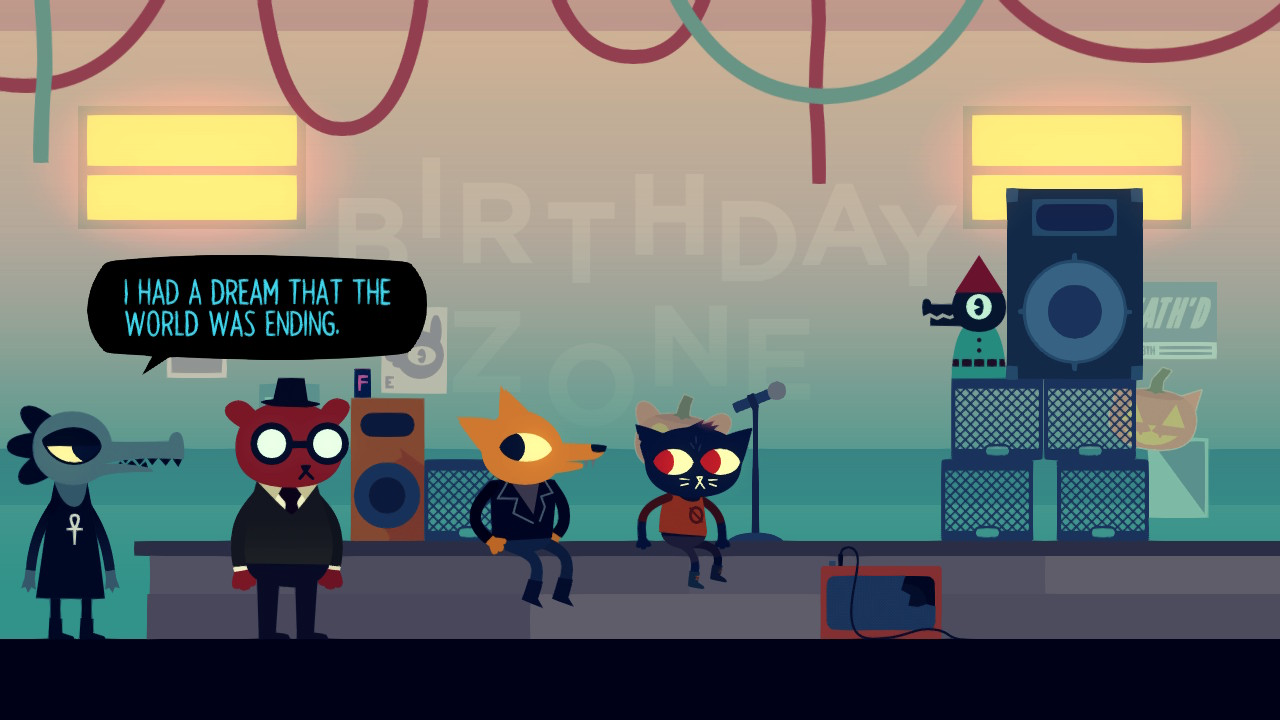
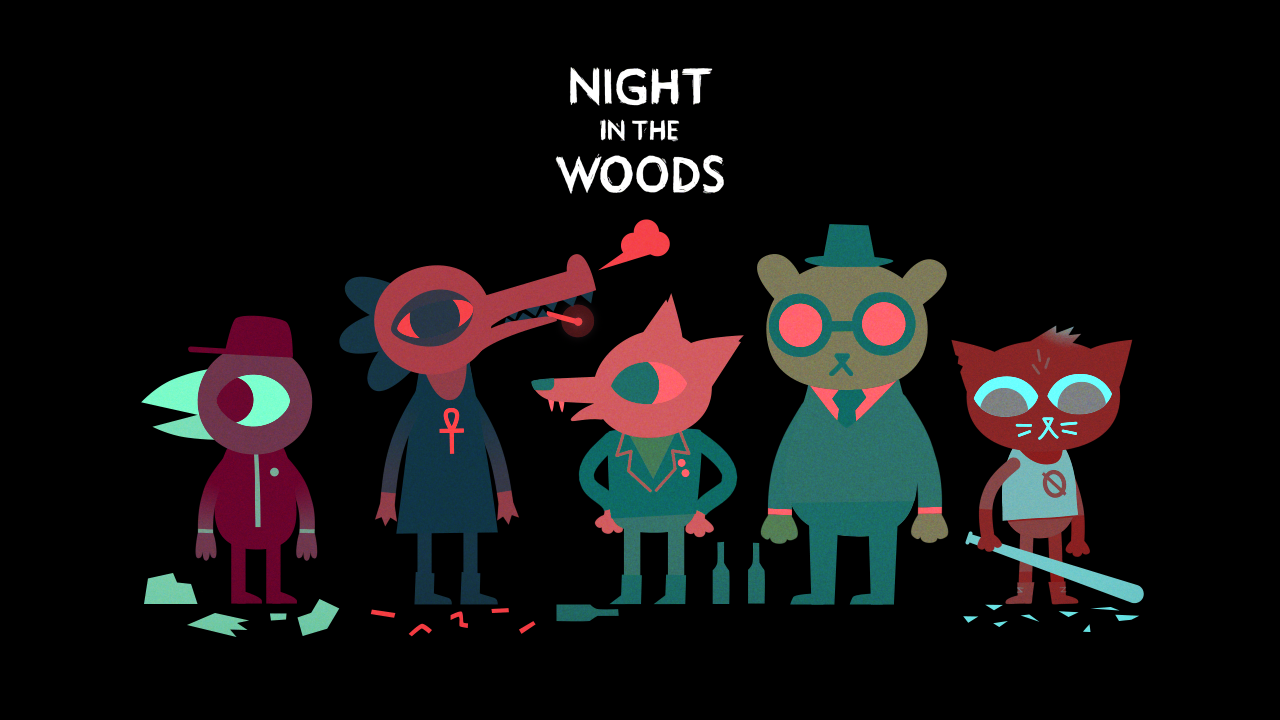
In Night in the Woods, the richly defined personalities of Mae’s friends create a tapestry of interactions that deeply influence not only the gameplay but also the overarching narrative. Each character brings a unique perspective that resonates with players, shaping the direction of the story based on the choices made throughout the game.
Mae’s Friends
1. Bea Santello
– Personality: Bea, the intelligent yet frustrated goth alligator, epitomizes the struggle against stagnation. Disillusioned by her responsibilities at her family’s hardware store and burdened with resentment towards Mae’s departure for college, she represents the consequences of unfulfilled aspirations.
– Interactions: Players can initiate significant encounters with Bea in places like the mall, where their conversations often delve into themes of class struggle and the weight of expectations. The complexity of their relationship evolves as players allow space for healing dialogues, gradually transforming Bea’s initial resentment into understanding.
– Questline Impact: The emotional journey of Bea culminates in a narrative that deeply personalizes the themes of freedom versus obligation. With player choices steering the course of their reconnection, her storyline urges Mae (and the player) to confront their past decisions and their impacts on friendships.
2. Gregg Burnham
– Personality: As an anarcho-punk fox, Gregg embodies carefree rebellion and the thrill of mischief. His laid-back demeanor invites players into a world of spontaneity and adventure, starkly contrasting the more serious tones reflected in Bea’s storyline.
– Interactions: Gregg’s energetic nature often leads to exhilarating escapades—like junkyard explorations or break-ins—that allow players to engage in humorous, youthful adventures. These activities foster a fun and whimsical atmosphere, encouraging Mae to revel in her reckless side.
– Questline Impact: Gregg’s storyline revolves around themes of youthful exuberance and the celebration of freedom, providing a counterbalance to the more serious confrontations presented by Bea. Players who connect with Gregg will experience thrilling, lighthearted quests that enrich the exploration of Mae’s vibrant inner world.
3. Lori Meyers
– Personality: Lori, the introspective deer, presents a quieter counterpoint to Mae’s more flamboyant friends. Wrestling with self-esteem, Lori’s depth is revealed through her creative pursuits and search for independence.
– Interactions: Players can choose to engage with Lori during tranquil moments, discussing personal challenges and artistic aspirations. These interactions foster a profound sense of companionship and connection, emphasizing the need for emotional support among friends.
– Questline Impact: By nurturing Lori’s creativity and instilling confidence through their interactions, players can help transform her story arc into one of empowerment and self-discovery. This subplot serves as a gentle reminder of the importance of emotional support in friendships.
4. Selmers
– Personality: Selmers, the cheerful aspiring poet, brings a friendly and open-hearted perspective to the friend group. Her creative nature shines through her poetic endeavors, underscoring the importance of artistic expression.
– Interactions: Through collaborative moments in artistic creation, players can engage in light-hearted and encouraging exchanges that enrich Mae’s character development. Selmers’ interactions often serve as a reminder of the small joys found in friendship.
– Questline Impact: Though Selmers’ role may be less central to the main plot, her presence offers a creative respite for Mae, enhancing the narrative with themes of encouragement and exploration of identity through art.
Impact on the Game
The various personalities of Mae’s friends not only enhance the gameplay experience but also play a pivotal role in shaping the narrative:
– Player Choice: The game significantly revolves around player choices, determining which friend to spend time with and how those interactions unfold. This choice system ensures that players can pursue different stories and outcomes, reinforcing the idea that relationships evolve based on mutual investment and understanding.
– Emotional Depth: Each interaction contributes layers of emotional complexity, inviting players to navigate themes such as friendship, identity crises, and personal growth. As the player dives deeper into these relationships, Mae’s multifaceted personality becomes more apparent, facilitating a more engaging narrative.
– Thematic Exploration: The game skillfully intertwines broader issues such as socioeconomic mobility, racial identity, and the consequences of past choices, allowing players to resonate with the experiences of the characters. Each friend provides a unique lens through which these themes can be explored, enriching the gameplay experience and promoting thematic engagement.
In conclusion, the distinct personalities of Mae’s friends in Night in the Woods significantly enrich the player’s experience, offering diverse paths and emotional narratives that delve into the complexities of relationships and personal journeys. Through their interactions, the game beautifully mirrors the real-life challenges of friendship, identity, and growth, ensuring a resonant and thought-provoking experience for players.

Leave a Reply