
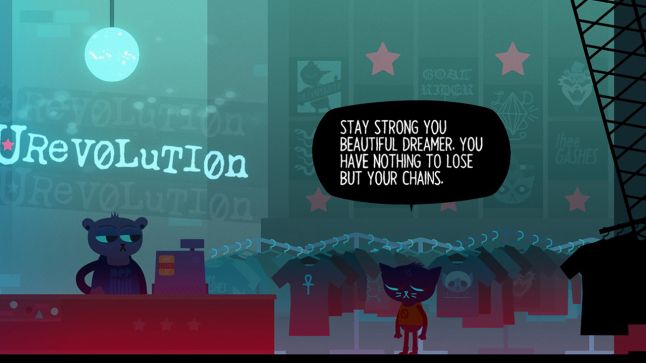
In Night in the Woods, the design choice to forego traditional power-ups or upgrades reflects the game’s focus on narrative depth, character development, and exploration rather than conventional gameplay mechanics often found in action or RPG genres. This approach allows players to engage more with the story and themes rather than being distracted by typical gameplay progression systems.
Mae’s Abilities:
1. Astral Projection:
– During her dream sequences, Mae experiences a form of astral projection, which is intricately linked to the game’s unsettling Black Goat mythology. This ability acts as a narrative device that offers insight into Mae’s psyche and the overarching themes of the game, rather than serving as a direct gameplay mechanic or a typical power-up.
2. Triple Jump:
– In certain platforming sequences, Mae can perform a triple jump, which enables her to reach higher areas or navigate tricky environments, such as the old abandoned Sawmill Park. However, unlike traditional games where abilities might be upgraded or enhanced, this skill remains constant, serving primarily as a tool for exploration rather than progression.
3. Musical Skill:
– Mae’s role as a bassist in her band brings a musical element to the experience. While engaging in rhythm-based mini-games, players can improve her performance by hitting the right notes. However, this does not result in character upgrades; rather, it enriches the storytelling by highlighting the importance of music in Mae’s life and social interactions.
4. Traversal Abilities:
– The game showcases Mae’s natural acrobatic skills, which allow her to jump from mailboxes to trees and power lines. These traversal mechanics provide players with a sense of freedom and encourage exploration of the town of Possum Springs. Yet, they are integrated within Mae’s inherent abilities and the game’s world design, rather than being enhancements that evolve with gameplay.
Conclusion:
Overall, Night in the Woods significantly deviates from the conventional power-up systems prevalent in many games. Mae Borowski’s abilities enhance the narrative and thematic experience rather than serve as quantifiable upgrades. This focus on story and character development creates an immersive experience that encourages players to explore the rich world and its underlying messages, positioning Night in the Woods as a unique entry in the realm of indie gaming. Without a formal power-up or upgrade system, the game invites players to dive deeper into Mae’s journey through her relationships and the trials she faces in her hometown, allowing for a profound exploration of themes such as mental health, identity, and the passage of time.


Leave a Reply