
In Outer Wilds, exploration is deeply rooted in a player-driven narrative that emphasizes non-linear storytelling primarily through environmental cues and the ancient civilization known as the Nomai. Rather than relying on traditional quest markers, the game encourages players to engage their curiosity to uncover the mysteries of its beautifully crafted solar system. Here are the key methods through which players can discover clues to enhance their exploration:
1. Nomai Writings and Technology:
Central to the game are the writings of the Nomai, which are scattered across various locations. Players can read these inscriptions to gain insights into significant sites that merit investigation. For instance, locations like the Tower of Quantum Knowledge on Brittle Hollow and the Lakebed Cave on Ember Twin serve as critical points where players can learn more about the Nomai’s history and scientific discoveries, propelling them further into the unfolding narrative.
2. Signalscope Tool:
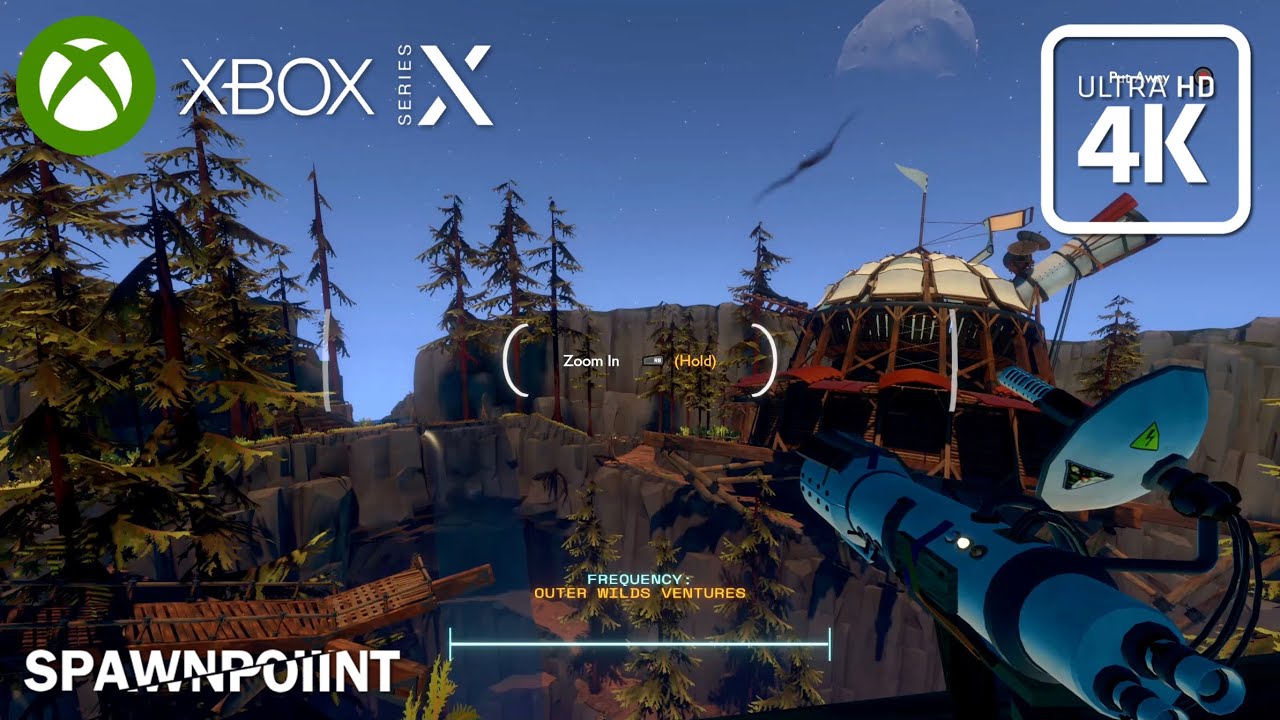
The Signalscope is an essential tool in your exploration arsenal, allowing you to detect signals from different objects or phenomena scattered across the solar system. By listening for these signals, which often originate from hidden Nomai camps or other points of interest, players can be subtly guided towards locations that may contain important clues or lead to new discoveries. Strategic use of the Signalscope at observation decks or high vantage points can unveil previously undiscovered areas.
3. Environmental Storytelling:
The game excels at using its environment to communicate information indirectly. Landmarks and natural features, such as the locations mentioned in Nomai texts, can provide actionable hints for players. For example, references to escape pods or specific geological features prompt players to explore those areas, revealing additional puzzles or lore.
4. Player-Driven Decision Making:
One of the hallmark features of Outer Wilds is the absence of a fixed path; instead, players make their own choices on where to explore based on the clues they uncover. This allows for a deeply personalized gameplay experience where curiosity, observation, and intuition guide the player’s journey through the solar system. Whether opting to revisit an earlier location with new knowledge or pursuing a newly discovered signal, every decision can lead to rewarding new discoveries.
5. Time Loop Mechanics:
The cyclical time loop introduces another layer of complexity to exploration. As players navigate the solar system, they’ll notice that some areas change significantly over the 22-minute cycle—such as sand filling certain regions or celestial bodies shifting positions. Understanding these changes is crucial to timing exploration effectively, allowing access to different clues and pathways that are only available at specific moments in the loop.
In summary, Outer Wilds invites players to engage with its world through a combination of Nomai inscriptions, innovative tools, environmental storytelling, and the implications of its time loop mechanic. This unique design fosters a sense of immersion and discovery, making the act of exploration a captivating adventure driven by player curiosity and initiative. As players piece together the remnants of the Nomai civilization and their own experiences, they embark on a profound journey that is as much about the questions as it is about the answers they find.

Leave a Reply