
Overview of Adaptive Difficulty in Resident Evil 2
The adaptive difficulty system implemented in Resident Evil 2 (2019) represents a significant evolution of gameplay mechanics, enhancing the player experience by dynamically adjusting the game’s challenge level based on individual performance. This system drew inspiration from mechanics found in previous entries of the Resident Evil series, specifically Resident Evil 4, 5, and 6. The primary goal is to maintain a consistent atmosphere of tension and challenge while preventing players from feeling overwhelmed or frustrated.
Key Components of Adaptive Difficulty
1. Enemy Health
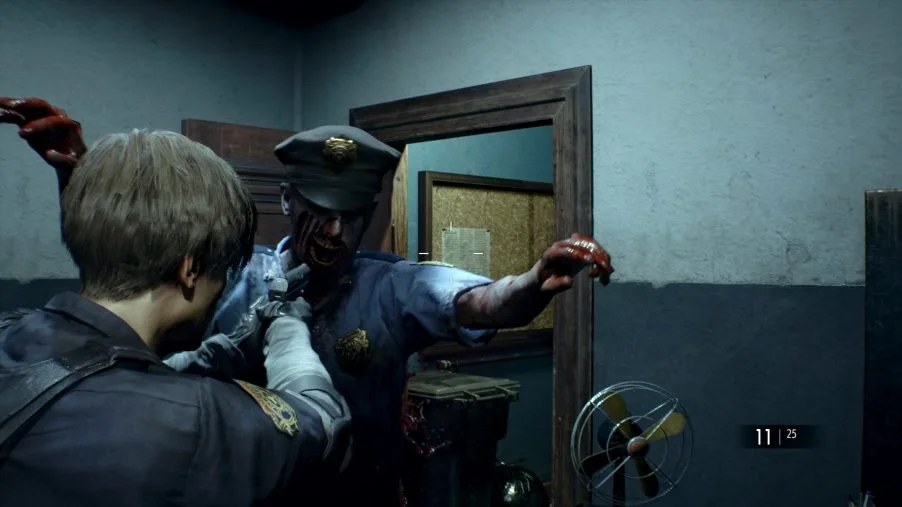
– Static Health Values: Enemies in Resident Evil 2 possess fixed health values, which means that the resilience of creatures, such as zombies, does not fluctuate in real-time based on player performance. For example, the zombie located by the morgue door has an exact health total of 1190 HP. This design choice emphasizes combat strategy and resource management rather than adapting health-based challenges to player ability.
– Mercy Mechanic: To balance the gameplay experience, the game incorporates a mercy mechanic. Under this system, if a player’s health drops to a ‘caution’ status (50% HP), certain lethal attacks that would typically result in death can instead leave the player with a minimal health reserve. This mechanic does not alter enemy health but plays a crucial role in how players navigate encounters and manage their health status within the game.
2. Enemy Aggression and Behavior
– Adaptive Behavior: The primary focus of the adaptive difficulty is on modifying enemy behavior instead of their health metrics. If players consistently struggle or die frequently, the system may temporarily reduce the number or aggression level of enemies within specific areas, making the game more lenient during tough segments. Conversely, if players showcase strong performance, such as efficiently dispatching foes, the game might respond by increasing enemy numbers or aggression, heightening the overall challenge.
– Contextual Behavior Changes: The placement and behavioral patterns of enemies can also adapt based on player efficacy. For instance, if a player consistently meets their demise in a particular location, the game can adjust the spawns in that area, possibly omitting certain adversaries to alleviate difficulty. This creates a tailored experience that aims to enhance engagement while accommodating skill variance.
3. Additional Factors
– Weapon Damage: The weapon effectiveness can also see subtle adjustments based on how players perform throughout the game. During standard gameplay, weapon damage may fluctuate within a range of approximately +10% to -20% in response to player actions. On the hardcore difficulty setting, weapon damage is consistently reduced to 70%, challenging players to strategize their attacks with limited firepower.
– Optional Adjustments: For those seeking additional assistance, Resident Evil 2 offers optional features like auto-aim and other aids designed to streamline gameplay, allowing players to modulate difficulty as needed. This flexibility empowers players to tailor their experience according to their comfort level with horror action mechanics.
Conclusion
In summary, Resident Evil 2’s adaptive difficulty system is a thoughtfully constructed feature that enhances gameplay by focusing predominantly on enemy behavior adjustments and player resource management rather than direct alterations to enemy health. This nuanced approach ensures a consistently engaging and challenging experience that adapts fluidly to player skill levels, allowing for a more personalized and immersive horror gaming experience. The combination of static health values and dynamic behavioral changes underscores the series’ dedication to balancing challenge and accessibility.




Leave a Reply