
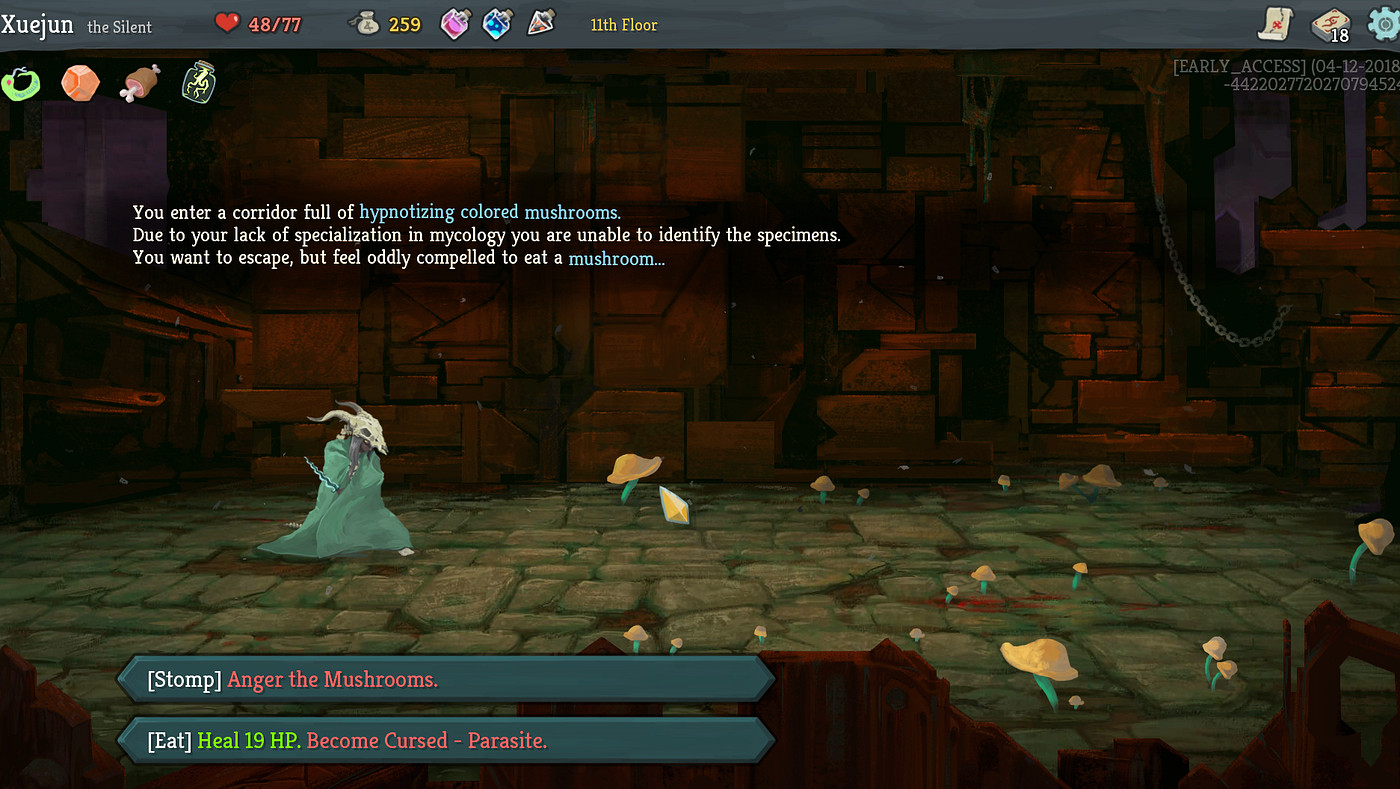
In Slay the Spire, the choices made in event rooms are pivotal, particularly in influencing a player’s long-term strategy, deck-building, and resource management. Here’s a detailed breakdown of how event room choices can shape a run through the game:
1. Act 1 Events Shape Deck Foundations
During Act 1, players have the opportunity to establish a foundational deck that can dictate the overall direction of their run. The events in this act often present unique cards and relics that allow for early commitment to certain strategies or synergies.
For example, by grabbing a synergy-enhancing relic or a niche card early on, players can experiment more freely without the fear of being too committed. A specific example involves picking up the Enlightenment card through the Serpent event, which may allow players to take on higher-cost cards earlier than normal, opening avenues for powerful, synergistic builds. The ability to shape the deck early on leads to a more cohesive and potent deck as the game progresses, cultivating synergies that enhance overall performance later in the run.
2. Event Options Designed Around Deck State
The structure of events is tailored to the progression of deck-building. In the early game, event choices frequently highlight unique options that encourage players to innovate and explore combination potentials. However, as players advance to later acts, these options shift to reflect a more established deck state.
In Acts 2 and 3, event options tend to provide broader utility—like boosts to strength or the incorporation of flexible cards (think of exhaust cards or certain skills)—as these rewards are designed to enhance established archetypes rather than introduce new, niche tactics. This evolutionary design enables players to maximize the effectiveness of their solidified decks while ensuring they adapt to the increasing challenges.
3. Risk vs. Reward in Act 2 and Beyond
As players tackle Acts 2 and 3, the stakes rise due to the ramping difficulty of encounters and the risk associated with poorly timed decisions. While the lure of events can be enticing, players must weigh the potential benefits against their current deck’s needs and overall health.
Choosing an event over combat can sometimes be the safer bet, especially if the event in question offers healing or significant outsize benefits that align with deck strategies, thus mitigating potential health losses during tough fights. Certain events in Act 2, for example, are lauded as “game-winning” because if their rewards fit with a player’s current deck, they can dramatically tilt the odds in favor of the player, transforming a good run into a great one.
4. Balancing Path Choices
Experienced players often adopt a strategic approach to navigating events and campfires, especially in the early acts. Given that events can provide valuable resources—such as powerful relics, card removal opportunities, or healing—prioritizing them can sometimes yield greater returns compared to standard combat encounters.
For instance, maximizing event rooms in Act 1 allows players to build optimal conditions for their deck while balancing health recovery at campfires. As players transition to Acts 2 and 3, they may shift their focus toward shops and elite encounters, especially if they have accumulated sufficient gold, while still selecting events based on the immediate needs of their deck.
5. Health and Deck Management
Ultimately, certain event choices revolve around enhancing health and survivability, which is critical as the game progresses. Events that allow for health recovery, card sacrifices for a net health increase, or rewards like max HP boosts can dramatically increase a run’s longevity.
For example, opting to sacrifice a rare card might seem risky at first glance, but the resultant healing and potential max HP increase can lead to a more durable run, fortifying a player’s chances against the tougher opponents encountered in later acts.
Conclusion
In summary, early choices regarding event room options are not merely about immediate gains; they play a significant role in guiding your deck’s development and establishing powerful synergies that can support you through the tougher challenges ahead. As players delve deeper into the run, later event choices become more about anchoring down strengths or covering weaknesses while continuously balancing risk and reward, tailored to the current deck state and health conditions. This strategic decision-making is key to success in Slay the Spire, giving astute players the upper hand in navigating their ascent through the spire.



Leave a Reply