
In Star Wars Jedi: Fallen Order, the evolution of Cal Kestis’s Force abilities is a central theme intricately woven into both the narrative and gameplay. This journey reflects Cal’s struggle to reconnect with the Force after experiencing significant trauma. The way in which Cal gradually regains his powers is both compelling and impactful, representing his growth as a character and a Jedi.
Starting Point: Damaged Connection
At the beginning of the game, Cal’s connection to the Force is severely impaired due to the traumatic events of his past, primarily the fall of the Jedi Order and the loss of his master, Jaro Tapal. This damaged connection restricts him to a single Force ability—Force Slow. This limitation serves as an effective narrative device, highlighting the internal conflict and struggle that Cal faces as he embarks on his journey of healing and rediscovery.
Flashbacks as Unlock Triggers
The game’s structure cleverly uses flashbacks to serve as catalysts for unlocking Cal’s Force abilities. These flashbacks occur at critical moments in the story, immersing players in Cal’s memories of training with Jaro. Each major Force power that Cal acquires corresponds with a particular flashback, reinforcing the notion that his rediscovery of the Force is linked to the teachings and love of his mentor.
Example Abilities and Their Acquisition
– Wall Run: This is one of the first abilities Cal relearns, triggered by a flashback when he finds a handprint on Bogano. The ability to perform a wall run not only enhances Cal’s mobility but also allows access to new areas, setting the stage for exploration.
– Force Push and Force Pull: As Cal delves deeper into his memories, he unlocks these iconic abilities. Force Push allows him to shove enemies away, while Force Pull enables him to retrieve objects from a distance, which are essential for combat strategy and solving environmental puzzles.
– Double Jump: Acquired later in the game, this ability corresponds with further exploration and often comes as a reward for tackling specific challenges or recalling certain training moments. The Double Jump significantly improves Cal’s agility, making traversal in the game more dynamic.
Training Sequences as Skill Tests
The gameplay includes dedicated training sequences that simulate Jedi exercises during Cal’s flashbacks. These sequences not only serve as practical tests of newly acquired abilities but also reinforce the notion that Cal is physically and mentally rebuilding his connection to the Force. By engaging in these interactive training moments, players experience Cal’s resurgence as a Jedi firsthand.
Force Ability Development Enhances Exploration and Combat
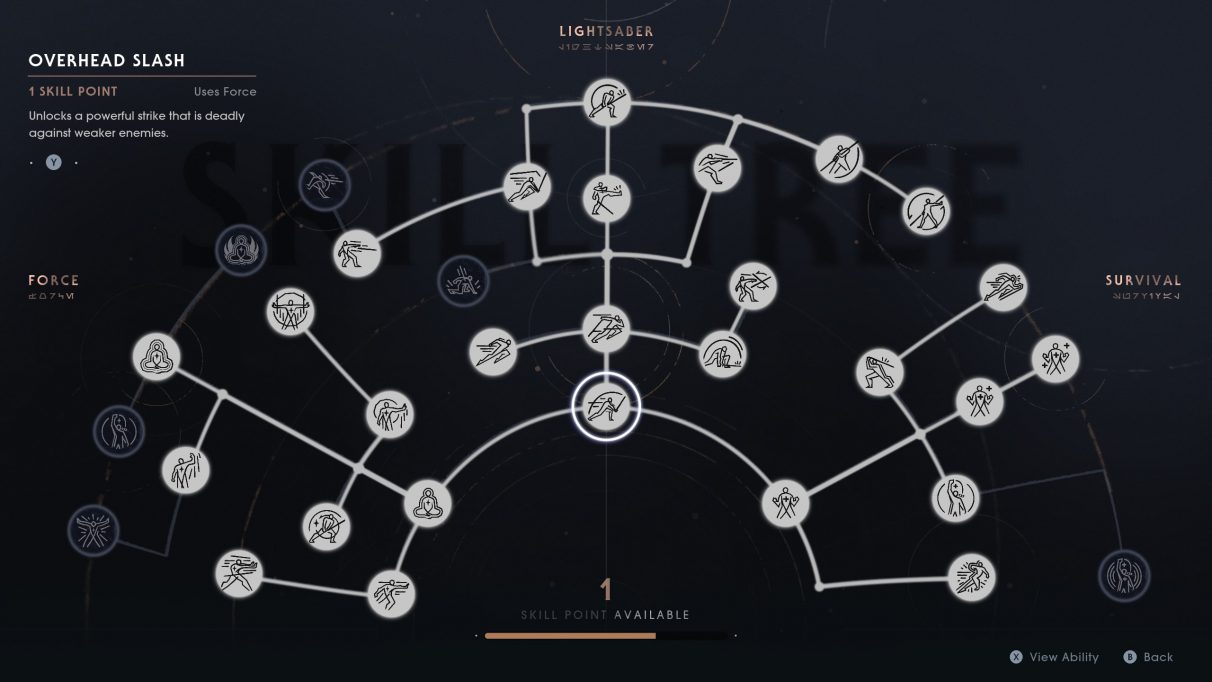
As Cal regains new abilities, there’s a tangible impact on both combat and exploration. Each unlocked power not only opens up new combat techniques but also grants access to previously unreachable areas in the game world, embodying the Metroidvania design principle. For instance, the Wall Run and Double Jump capabilities facilitate exploration of varied environments, while Force Push and Pull enhance combat efficacy and engagement in puzzle-solving scenarios. Furthermore, the character’s Force meter and skill upgrades can be enhanced using skill points gained throughout the game, illustrating Cal’s progression and increasing mastery over his powers.
Summary
In summary, Star Wars Jedi: Fallen Order provides a rich narrative experience where Cal Kestis’s Force abilities symbolize his personal growth and journey toward healing. Through story-driven flashbacks tied to training sequences, players witness the evolution of Cal’s connection to the Force, with each new ability representing a step forward in his reclamation of his Jedi identity. This progression not only enhances the gameplay mechanics—enriching combat and exploration—but also resonates deeply with the overarching themes of recovery and resilience within the game’s story.

Leave a Reply