
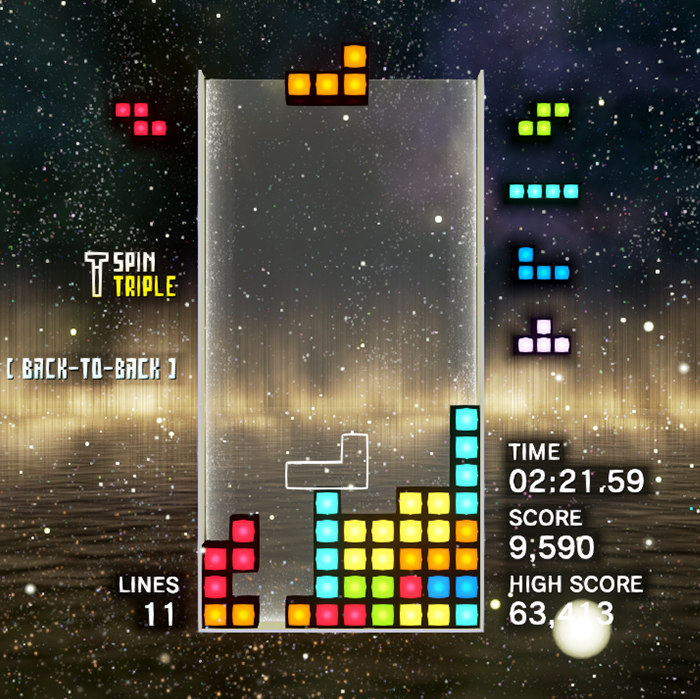
To achieve back-to-back Tetrises in Tetris Effect while ensuring stack stability, employing the pyramid stacking method is crucial. Here’s a detailed breakdown of effective strategies to master your stacking technique:
1. Understanding Pyramid Stacking
– Definition: Pyramid stacking involves constructing your stack so that the fifth column (the center) is the highest point. This structure facilitates seamless dropping of pieces and provides more freedom for lateral movements.
– Implementation: While you don’t need a perfect pyramid, ensure the center is higher than the edges. This optimal shape prevents awkward placements of Tetriminos like O and J, which need more room to fit properly.
2. Maintaining Flatness with Controlled Unevenness
– Stack Shape: Your stack should generally be flat but not entirely so. A mostly even surface allows for the quick placement of S and Z Tetriminos, which thrive on minor height variations for effective rotation.
– Controlled Unevenness: Incorporate slight variations in height, avoiding extreme peaks or valleys. This approach keeps the stack manageable while ensuring you have the necessary space for diverse piece placements.
3. Creating a Dedicated Column for Tetrises
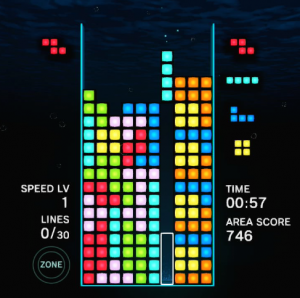
– Open Column: Designate the far right column as an open space where you can drop your I-piece for constructing Tetrises. This method minimizes lateral movement.
– Advantages: Having an open column reduces the risk of misplacing pieces and saves valuable time during gameplay, thereby improving your efficiency in achieving Tetrises.
4. Practicing Fast Movements and Piece Previewing
– Speed is Key: In the high-speed environment of 20G gravity mode, where ghost pieces are not available, practice is essential. Work on your speed and accuracy when placing pieces in your pyramid stack.
– Next Queue Awareness: Keep an eye on your upcoming pieces in the NEXT queue. Efficiently managing the layout based on future pieces helps in maintaining stack integrity and enhances your capacity for continuous Tetrises.
5. Integrating T-Spins for Back-to-Backs
– Strategic T-Spins: To maintain your back-to-back bonuses, incorporate T-Spins that fit seamlessly into your overall stack structure.
– Avoid Forced Plays: Be cautious not to force T-Spins at the expense of your stack’s shape. Instead, look for opportunities to place “all-spins”—connections and unique placements that allow T-Spins without destabilizing the current configuration.
Conclusion
By focusing on maintaining a stable pyramid stack, ensuring a slightly uneven surface, and leaving a dedicated column for Tetris opportunities, you create a robust foundation for back-to-back Tetrises in Tetris Effect. Regular practice of these stacking strategies will not only enhance your gameplay stability and piece placement efficiency but also significantly boost your scoring potential in high-level play. As you implement these techniques, you’ll notice improvements in both speed and accuracy, paving the way for a more effective Tetris experience.



Leave a Reply