
The environmental puzzles in The Last of Us Part II are integrated beautifully into the game’s rich world, challenging players to think critically and make use of their surroundings creatively. These puzzles not only enhance immersion but also serve as obstacles that reinforce the gameplay mechanics and narrative. Let’s delve deeper into the core elements, provide further examples, and contrast them with puzzles from other titles.
Core Elements of Environmental Puzzles
Interacting with Objects
1. Moving Dumpsters:
– Players frequently encounter movable objects like dumpsters and crates. To utilize these items, players can approach and interact by holding a designated button—typically triangle or square for PlayStation controllers—allowing them to push or pull the object into the necessary position. For example, moving a dumpster under a ledge creates a makeshift staircase, enabling players to access higher ground.
2. Rope Usage:
– Ropes play a significant role in navigating the game’s vertical landscapes. By identifying anchor points, which are usually highlighted when nearby, players can attach ropes to swing across gaps or lower themselves to different elevations. This mechanic adds dynamism to exploration and requires players to think about how to use the rope creatively, such as using it to bridge two locations or lower themselves into a lower area.
Example: Downtown Level Firetruck Puzzle
A fantastic illustration of environmental puzzle mechanics occurs during a sequence in Downtown involving a firetruck:
– Locate the Firetruck: Players explore the semi-open-world setting, seeking out the firetruck situated centrally.
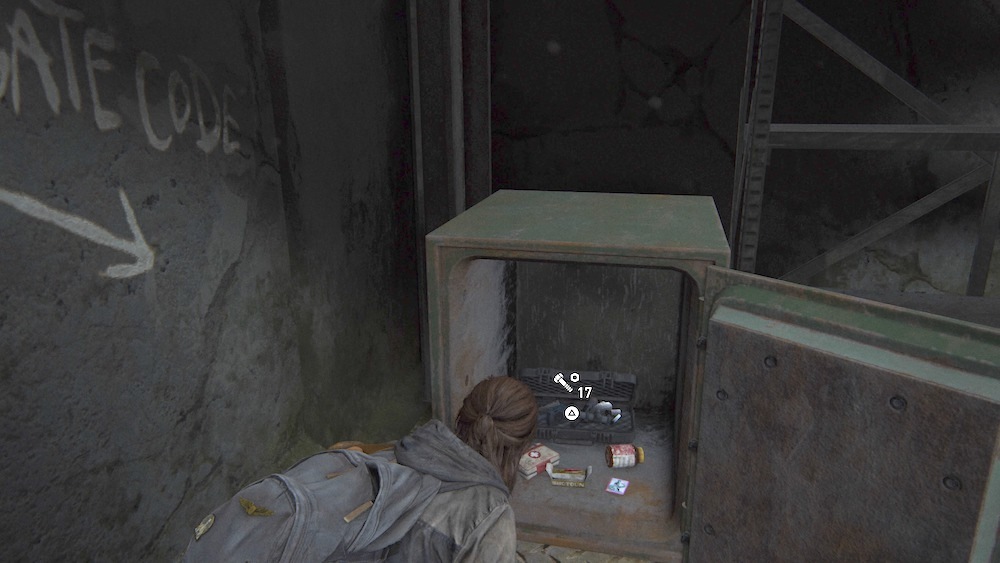
– Loot and Tools: Upon examination of the firetruck, players discover useful items, including an axe, which can be pivotal for solving other areas’ puzzles.
– Using the Hose: Players interact with the fire hose attached to the firetruck, employing it as a tool to either drop down or swing across to a nearby island. This not only provides access to extra loot but also creatively intertwines an environmental element into the puzzle-solving process.
– Environmental Manipulation: The player must think critically about how to manipulate the environment, utilizing items and their surroundings to progress through the game.
General Puzzle-Solving Strategies
– Exploration: Adopting a thorough exploration approach is crucial, as many puzzle solutions hinge on unearthing hidden items and interactive components that might not be immediately visible.
– Observation: Players should remain vigilant for environmental clues—cues that hint at solutions such as conspicuously placed objects or glowing interaction prompts.
– Tool Utilization: Effective use of tools (like the axe or ropes) is fundamental in creating paths and resolving obstacles.
– Trial and Error: Many puzzles encourage experimentation. Players may need to reposition objects multiple times or try different scenarios before arriving at the correct solution.
Comparison to Other Games
Compared to puzzles in other titles, such as The Witness, which primarily focuses on perspective and alignment of visual elements, the environmental puzzles in The Last of Us Part II emphasize physical interaction and logical reasoning. While The Witness encourages abstract thought through intricate designs and patterns, The Last of Us Part II roots its puzzles in tangible elements, making it feel more grounded and accessible.
Summary Table: Environmental Puzzle Mechanics
| Puzzle Type | Solution Method | Example in TLOU2 |
|————————–|————————————————-|————————–|
| Moving dumpsters | Push/pull to create platforms or stairs | Accessing high ledges |
| Rope puzzles | Attach ropes to anchor points/swing | Crossing chasms/islands |
| Vehicle/interactive tools| Utilize vehicle components/tools (hoses, etc.) | Firetruck hose swing |
Advanced Tips
– Patience: Many puzzles involve multiple stages or require players to revisit previous areas for necessary objects. Keeping a calm mindset helps in challenges that necessitate backtracking.
– Listening: Pay attention to character dialogue; Ellie or Abby may provide hints or reactions to the environment that can guide players towards the solution.
– Inventory Management: Keep an eye on the inventory, as a full inventory can limit interactions with crucial items necessary for puzzle solving.
By engaging in exploration, utilizing observation skills, and interacting with the environment, players can tackle the diverse puzzles in The Last of Us Part II. Each successful puzzle resolution not only unlocks new pathways but also deepens the exploration experience, revealing the rich crafting of the game’s world.

Leave a Reply