
In Through the Darkest of Times, players must navigate the treacherous landscape of resistance against the Nazi regime while ensuring the welfare of their group. This game underlines the ethics of resistance and the necessity of sustaining one’s allies, blending management strategies with moral choices. Below is a comprehensive guide on how to prioritize both aspects effectively.
Understanding Key Mechanics
1. Group Morale and Supporters
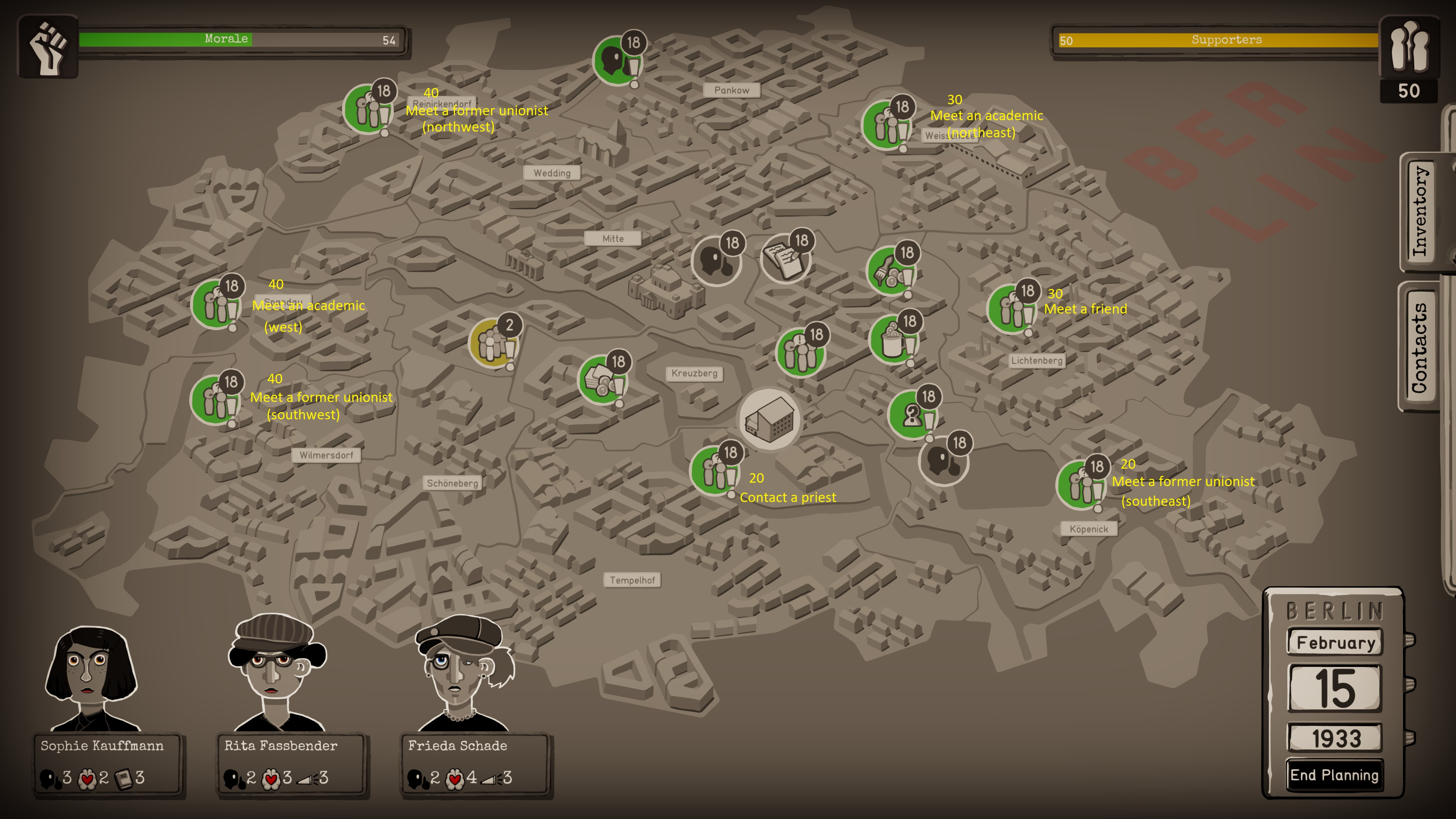
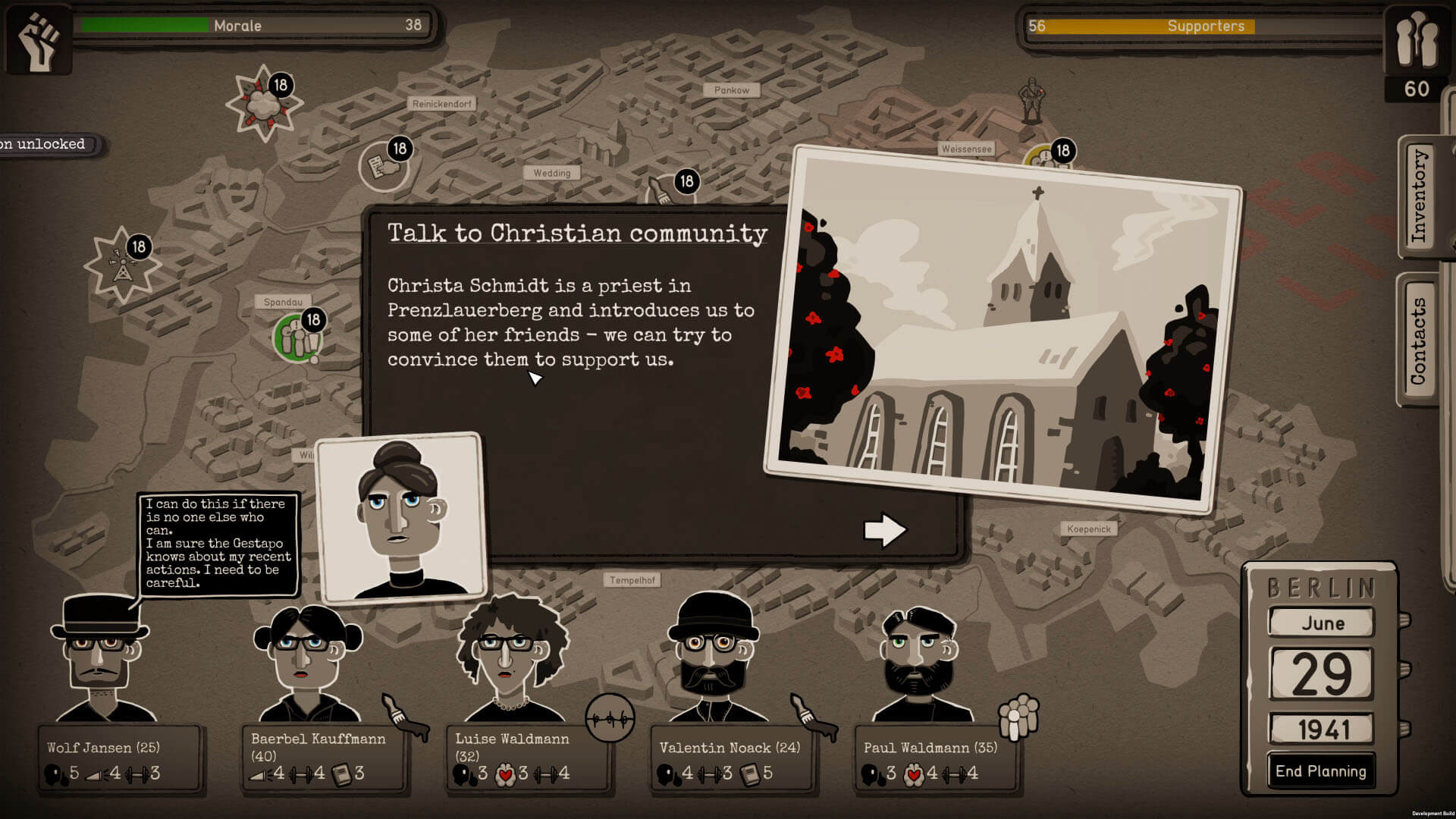
– Morale Management: Morale is a pivotal element, fluctuating between -10 to 100. Each week, it automatically drops by 10 points, prompting players to engage in activities that can boost morale, such as successfully completing missions or making favorable decisions during interactive text events[^1].
– Supporters Management: Maintaining a sufficient number of supporters is essential for the survival of your resistance group. Each chapter presents optional challenges that can help increase your supporter base, thus ensuring your group’s viability and influence over time[^2].
2. Mission Planning and Execution
– Mission Selection: Tactically choose missions that leverage your group’s strengths while minimizing risks. Some opportunities may present greater risks but could yield higher rewards in terms of morale boosts and expanding your supporter network[^3].
– Group Member Management: Leverage the unique traits and skills of each member when assigning them to missions. A well-thought-out distribution can enhance the success rate of missions; however, increasing the number of participants also heightens the risk of detection and negative repercussions[^5].
Balancing Welfare and Resistance
1. Welfare of the Group
– Supply Management: Financial resources are vital for acquiring necessary supplies and maintaining safe houses. A comfortable supply buffer can help to protect high-risk members from police crackdowns and fallout from increased “heat” levels[^5].
– Heat Management: Monitor the “heat” associated with your members, as higher levels signify greater likelihood of police raids. Strategically plan missions to reduce this heat or employ tactics to shield members who have elevated risk profiles[^3].
– Member Safety: Avoid missions that could jeopardize the safety of crucial members. Keeping key figures in your resistance active is often more advantageous than pursuing aggressive missions that risk their lives[^1].
2. Moral Imperative to Resist
– Mission Types: Aim for missions that fulfill moral directives by disseminating anti-Nazi sentiments, disrupting oppressive activities, or gathering critical intelligence. Successful missions in these areas help lift morale and bolster support for your group[^3].
– Risk vs. Reward: Always assess the potential cost of missions against the benefits they might offer in morale and supporter numbers. High-stake missions can bring significant advantages but can also lead to dire consequences for your group[^1].
– Survival as Resistance: Recognize that simply keeping your group intact serves as a form of resistance. Prioritize the longevity and health of your group as a primary goal, allowing for continued resistance efforts over time[^5].
Strategic Tips
– Adaptability: Stay flexible and be ready to shift your strategies in response to the outcomes of missions or unexpected events. This may involve recalibrating your approach to morale management or adjusting mission priorities[^4].
– Resource Allocation: Efficiently manage your resources to simultaneously secure your members’ safety and contribute actively to the resistance. Striking a balance between these two priorities is essential to sustain both aspects over the long haul[^5].
– Long-term Planning: Engage in strategic foresight by gradually building your resistance network while managing your group’s exposure level to challenges. This careful planning can prevent the loss of essential members and maintain a stable resistance front[^3].
By prioritizing these elements, players can effectively balance the welfare of their group with the moral imperative to resist, navigating the complex landscape of oppression and resilience in Through the Darkest of Times.
—
[1]: In-game events and outcomes may influence morale fluctuations.
[2]: Optional challenges increase supporter levels and group viability.
[3]: Missions should match group strengths while assessing risk.
[4]: Effective strategy involves adaptability to changing circumstances.
[5]: Resource management is critical for safety and resistance efforts.

Leave a Reply