
In the game Tunic, players navigate an intricately designed world filled with diverse enemies, each presenting unique challenges and opportunities. The game’s instruction manual, while not explicitly detailing enemy vulnerabilities, provides the foundation for players to infer strategies through observation and engagement. Below is a comprehensive analysis of select enemies alongside insights derived from the manual to unpack their vulnerabilities.
Enemies in Tunic
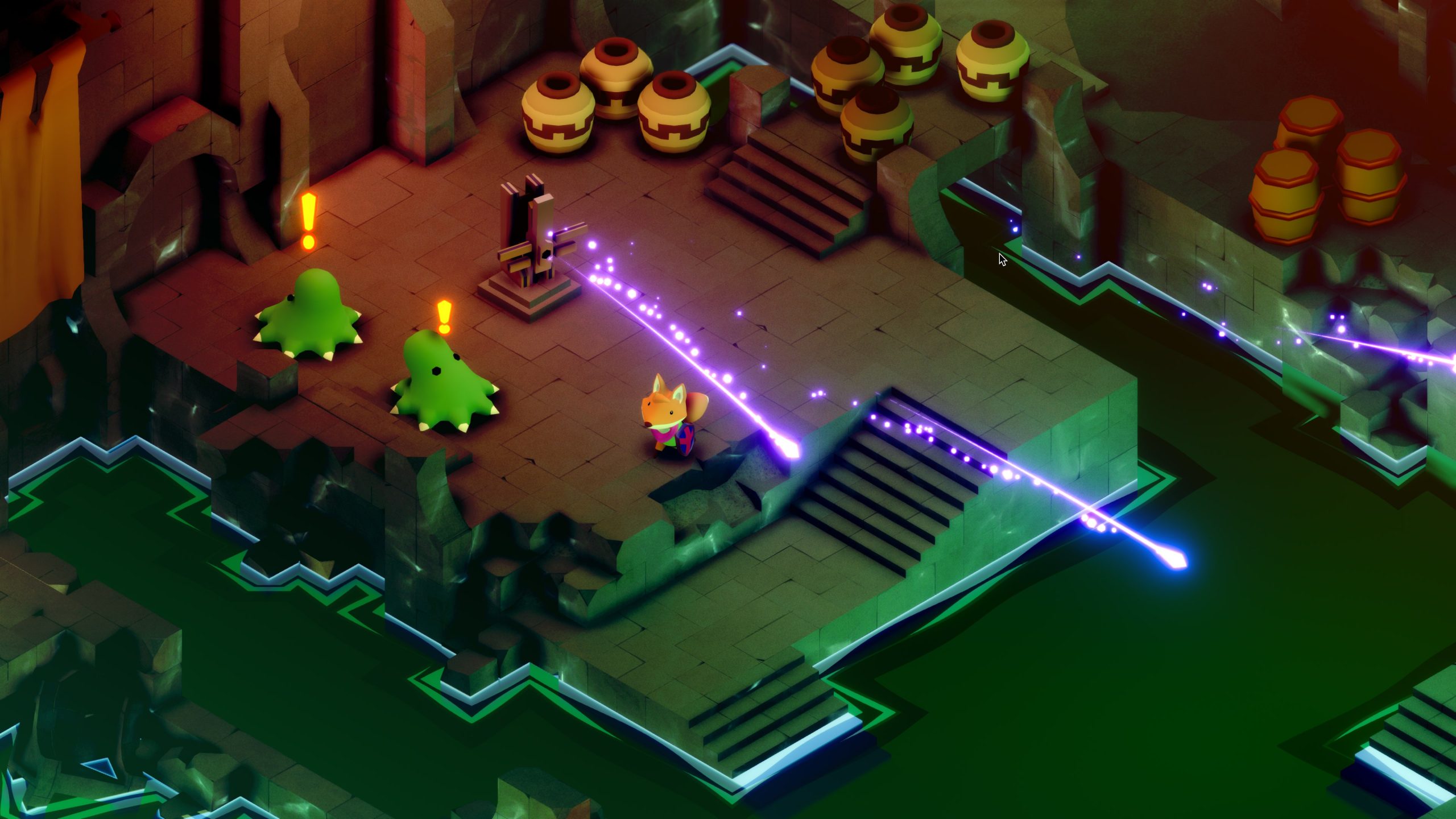
Blob
– Variants: Small pink, small blue, large blue.
– Inferred Vulnerabilities:
– The manual does not directly outline specific vulnerabilities for Blobs; however, players quickly recognize these creatures as some of the game’s weaker foes. Players can deduce that all Blob variants are susceptible to basic attacks due to their lower health and damage output. Among the variants, small pink and small blue Blobs exhibit diminished resistance compared to the larger blue Blob, necessitating a bit more effort to eliminate. Players may find these enemies can be defeated with quick successive strikes.
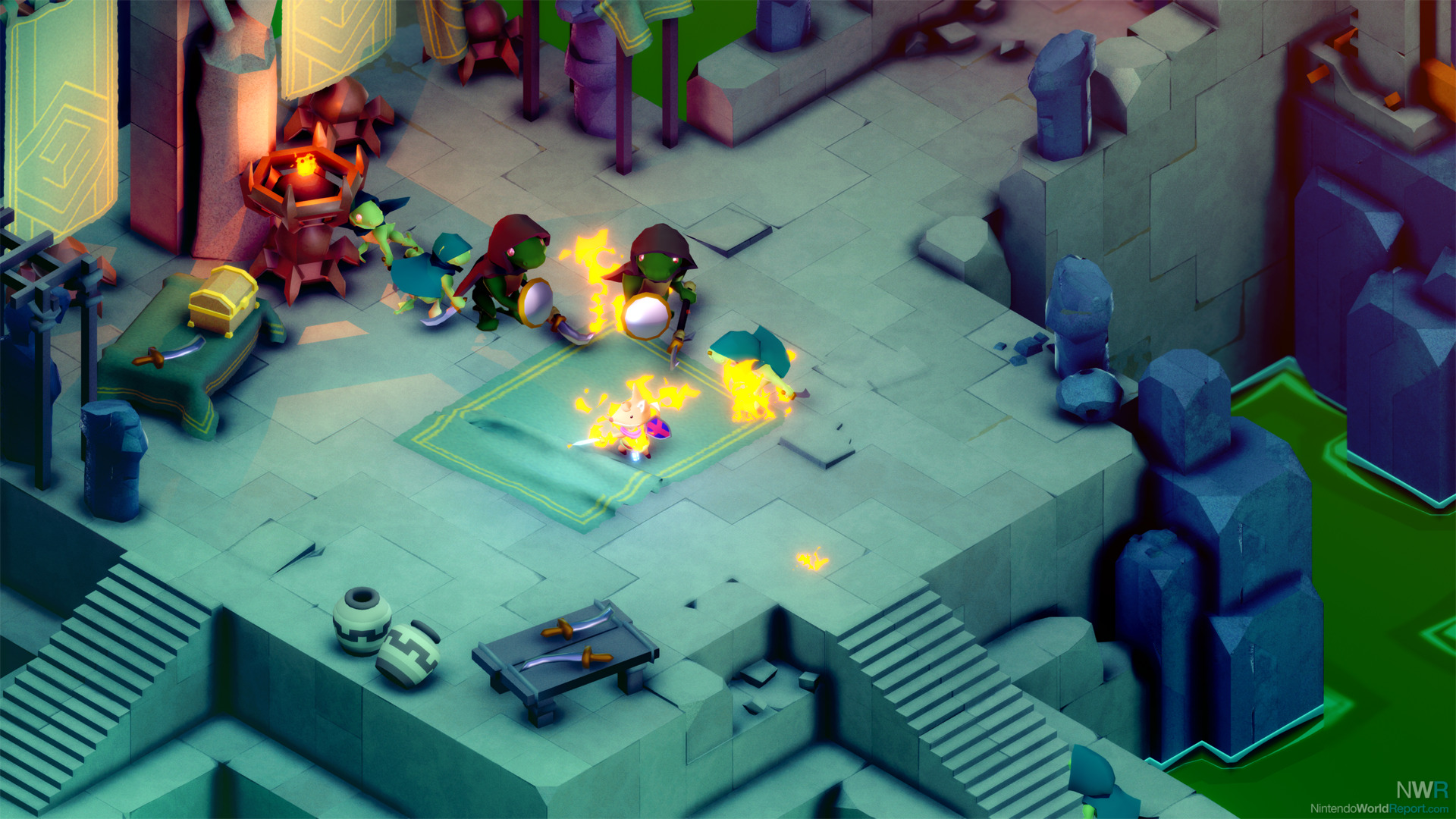
Rudeling
– Variants: Red, blue, purple.
– Inferred Vulnerabilities:
– The manual’s intriguing description of Rudelings as “Ghosts of soldiers who have forgotten why they fight” hints at their programmed, mechanical behavior. This insight suggests that players can exploit their predictable movement patterns. For instance, players might observe their cues and attack in the intervals between their movements or after they attempt to engage. The manual’s focus on their “following orders” nature encourages players to identify rhythm and timing, effectively using it to counter them.
Hedgehog
– Variants: Pink, blue.
– Inferred Vulnerabilities:
– Hedgehogs introduce a projectile threat into the mix. While the manual avoids directly stating their vulnerabilities, gameplay experience teaches players that timing is essential. Observing the attack patterns of Hedgehogs reveals that they pause between firing projectiles, presenting a prime opportunity for melee attacks. The pink variant poses much less of a threat compared to the blue, suggesting it might be more easily dispatched. Therefore, engaging pink Hedgehogs directly when they are not attacking is a strategic choice for players.
Manual Hints
The richness of the instruction manual lies in its visual and text-based hints that encourage exploration and experimentation. The illustrations serve as a springboard for understanding enemy behaviors and potential strategies without laying everything out plainly. For example, visual cues might indicate certain attack patterns, guide players toward effective dodging, or suggest moments to strike. This design fosters a culture of trial and error, where players learn through experience and attentiveness rather than simply following instructions.
Conclusion
The instruction manual in Tunic acts as a subtle yet impactful tool to facilitate player engagement with the game’s rich mechanics and diverse foes. While it refrains from explicitly identifying vulnerabilities, it encourages players to observe and infer strategies through their interactions with enemies. By motivating players to experiment and analyze enemy behavior, the manual enhances the overall gameplay experience, making each encounter compelling and challenging. As players venture through the world, they are rewarded with a sense of discovery as they learn to master the art of combat and leverage enemy weaknesses effectively.



Leave a Reply