
What Remains of Edith Finch is a profound exploration of the themes of death and family legacy, intricately woven through both its narrative structure and the immersive environmental design of the Finch family home. The home serves not only as a physical space but also as a metaphorical memorial-tomb, where each room dedicated to a deceased family member acts as a shrine that encapsulates their life and tragic demise. This setting powerfully symbolizes the idea that the living Finches are continuously entwined with the memories and legacies of those who came before them, underscoring a persistent sense of history and connection even in the face of loss.
As players guide Edith through these intricately designed rooms, the game presents vignettes or “minigames” that allow for a multifaceted exploration of her relatives’ lives. Each story, steeped in personal objects and rich narrative elements, transcends mere recounting of deaths, instead offering poetic and often fantastical reimaginings of their final moments. This approach accentuates the universal notion that death, while a daunting “curse,” shapes and resides alongside life, impacting each family member in unique and intricate ways. The game emerges not only as a memorial but as a celebration of life, honoring the individuality and vibrancy of each Finch even in their demise.
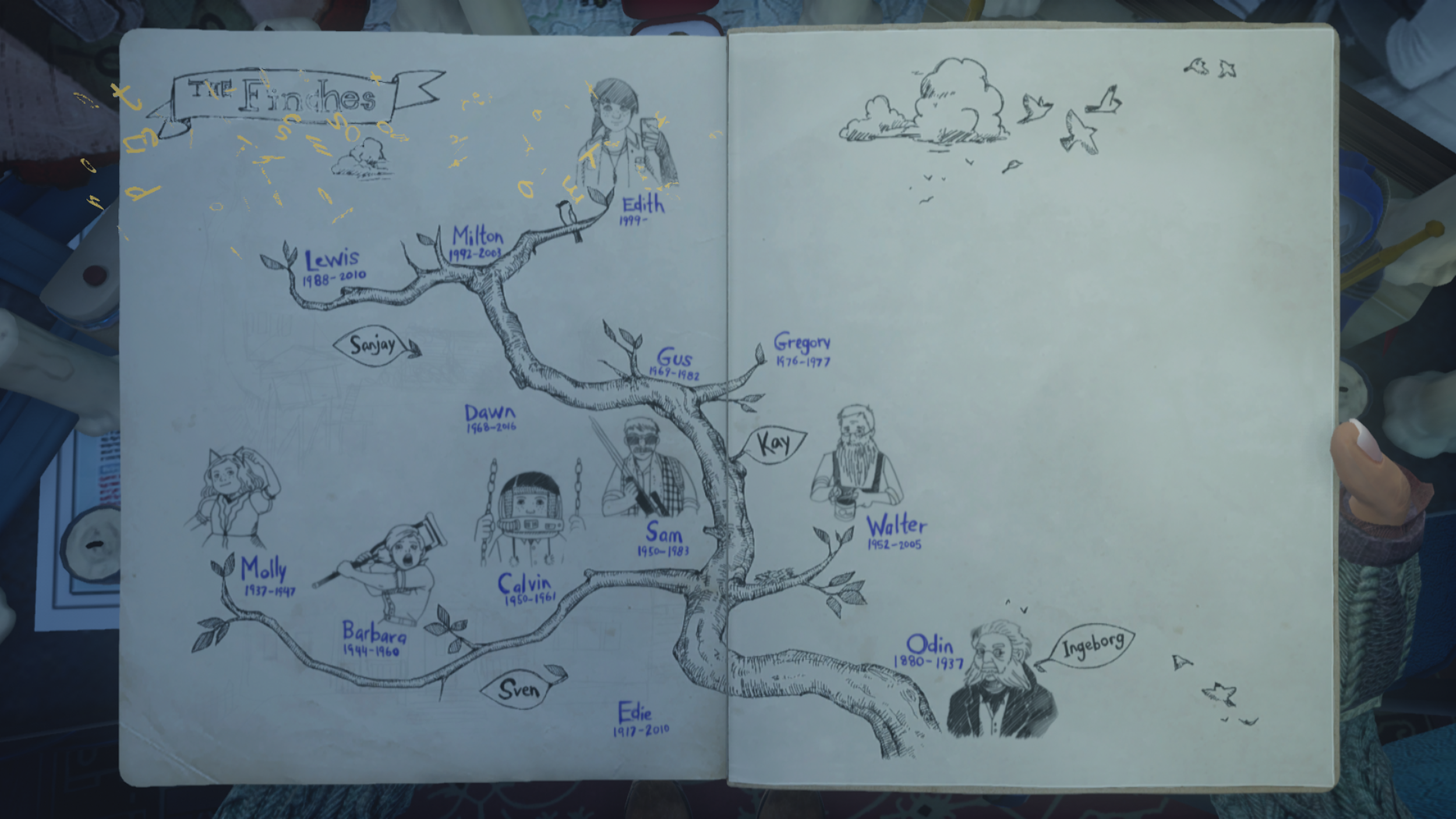
Central to this narrative is Edith’s role as the last living Finch, tasked with uncovering and recording these poignant stories for her unborn child. This act of storytelling serves as a critical device, illustrating how memories and narratives are essential for preserving familial ties and imparting meaning to the inevitable reality of death. The key Edith inherits, which opens a book, is emblematic of this symbolic doorway to her family’s extensive history, emphasizing the perpetuity of memory through storytelling.
Atmospherically, the game employs a somber, gothic aesthetic, often visualized through fog and twilight tones that evoke feelings of entrapment by fate. This ambiance skillfully mirrors the complexities of mortality and the haunting nuances associated with loss. Yet, the narrative does not solely dwell in despair; it transitions towards an encouragement to embrace the strangeness and brevity of life. The game actively invites players to cherish their familial relationships and the legacies left behind, creating a balance between melancholic reflection and whimsical nostalgia.
Mechanically, What Remains of Edith Finch deftly captures the tension between the enigma of death and humanity’s intrinsic desire to understand and memorialize it. By blending moments of whimsy with melancholic musings, the game transcends a simplistic portrayal of grief, instead crafting a rich tapestry of legacy and remembrance.
In conclusion, What Remains of Edith Finch utilizes its setting, narrative, and gameplay to deeply probe how death influences family legacy, presenting intimate stories that interlace memory and celebration. Edith’s journey through these familial narratives becomes not just a remembrance of the deceased but a meditation on the enduring importance of storytelling in honoring those who have passed. The game frames death as not merely an ending, but as an integral chapter in the ongoing saga of family life, inviting players to reflect on their connections to one another and the legacies they inherit and create.



Leave a Reply