
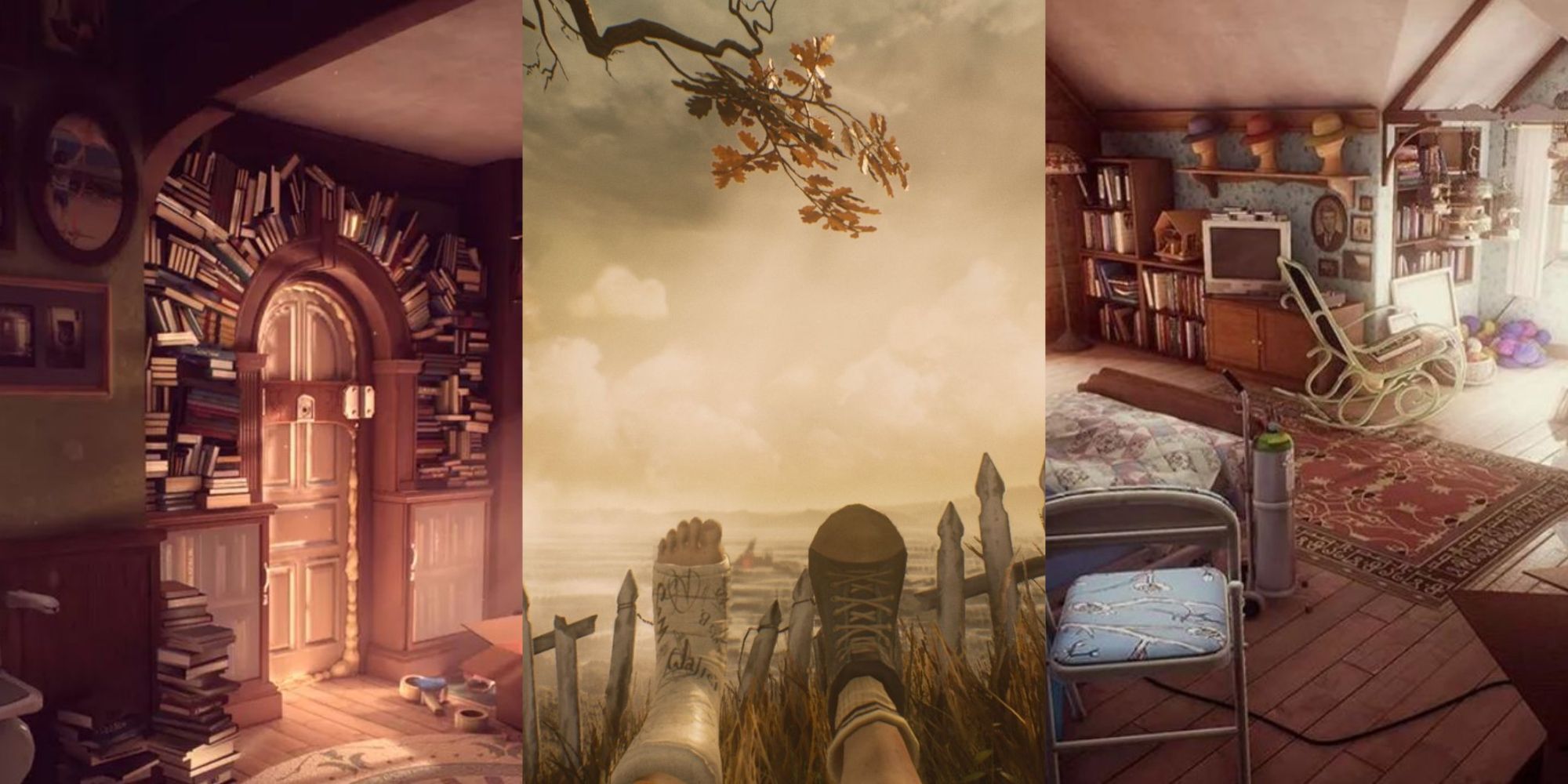
In What Remains of Edith Finch, the design of the Finch house encourages players to explore beyond the main narrative trajectory, offering a rich tapestry of family history tucked away in secret spaces and forgotten corners. As players navigate this beautifully crafted environment, they encounter hidden passages and doorways that unveil the individual stories of the Finch family members, each linked to their tragic fates, creating a haunting yet immersive experience.
The intentionality behind this design lies in its ability to convey themes of loss and memory within an unsettling atmosphere. The chaotic and abandoned state of the house reflects the weight of past grievances and tragedies, particularly after Dawn Finch’s abrupt departure. Exploring these secretive routes does not only serve to deepen the lore—each area is a meticulously detailed shrine commemorating a family member, filled with personal artifacts and narratives that enhance the overarching story of familial curse and grief.
While players are encouraged to stray from the main path, it’s important to note that the exploration is somewhat bounded. Once players enter the interior of the house, they cannot exit back outside until the game’s plot leads them to transition through the house to the next location. This restriction ensures that while players can delve into additional layers of narrative and atmosphere, the core progression of the game remains intact, preventing any frustration related to backtracking.
In conclusion, wandering off the main path in What Remains of Edith Finch not only enriches the player’s understanding of the Finch family and their tragic history but also enhances the overall emotional depth of the game. The carefully crafted hidden locations foster a sense of discovery and immersion, allowing players to piece together the family’s story without imposing penalties to gameplay progression, creating a compelling blend of exploration and narrative engagement.


Leave a Reply