
In The Last of Us Part II Remastered, the variety of difficulty modes ensures that every player can find a suitable challenge tailored to their gameplay preferences, from casual story-focused experiences to intense survival scenarios. Below is a detailed exploration of each difficulty setting available in the game, including the newly introduced No Return mode.
Difficulty Modes Overview
The game features six main difficulty modes, each designed to alter the core aspects of gameplay such as enemy behavior, resource management, and player survivability. In addition to these, the No Return mode brings a roguelike element for players seeking a novel challenge.
1. Very Light (Story Mode)
– Enemies: Non-threatening and easily dispatched.
– Resources: Abundant and easily collectible, allowing for a more exploratory experience.
– Player Health: High tolerance to damage, making it forgiving in combat.
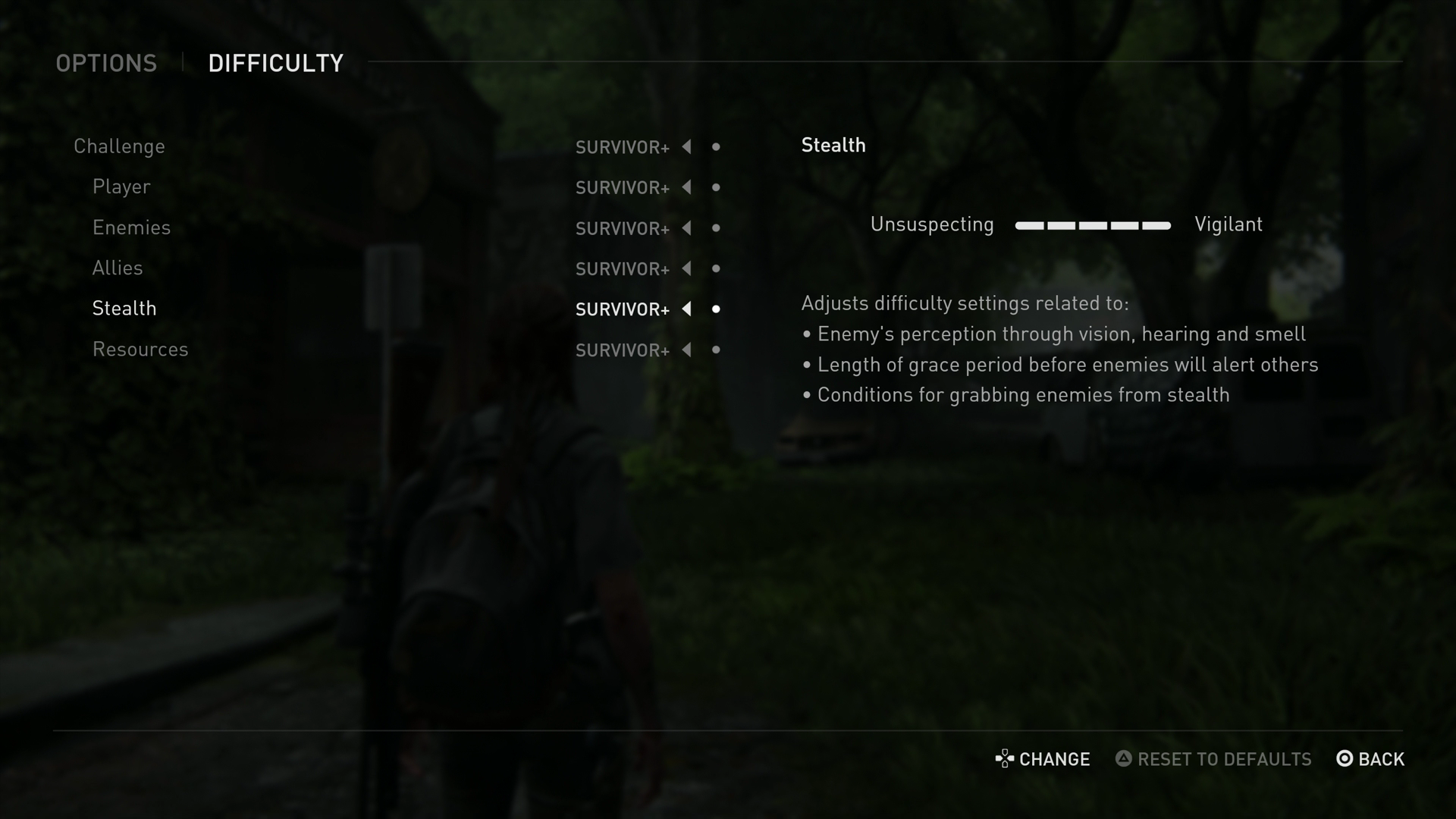
– Stealth: Enemies are significantly slower to perceive the player, encouraging stealth tactics without pressure.
– Aim Assist: Enhanced lock-on aim aids in shooting accuracy, reducing the mechanical barrier for players.
– Purpose: Designed for those who prioritize narrative over challenge, offering a stress-free approach to the story.
2. Light
– Enemies: Marginally more aggressive than Very Light, providing a moderate level of challenge.
– Resources: Generous availability, more so than in the Moderate setting.
– Player Health: Reasonable health compared to more difficult modes.
– Stealth: Enemies are somewhat alert and can detect players more quickly than in Very Light.
– Purpose: Aimed at players looking for some combat and puzzle-solving without significant difficulty.
3. Moderate
– Enemies: Balanced aggression that offers a fair challenge for most players.
– Resources: Limited but strategically placed to encourage exploration.
– Player Health: Standard health statistics require players to make thoughtful decisions during combat.
– Stealth: Enemies are attentively aware of surroundings, adding tension to stealth gameplay.
– Purpose: Recommended as the default setting; it creates a well-rounded experience and is suitable for a wide audience.
4. Hard
– Enemies: More aggressive and dangerous, increasing the challenge significantly.
– Resources: Scarcity intensifies the survival aspect of gameplay.
– Player Health: Players must adopt a cautious and strategic approach to survive.
– Stealth: Enemies are very alert; sneaking requires finesse.
– Purpose: For players desiring heightened challenge without extreme limitations.
5. Survivor
– Enemies: Highly aggressive and lethal, providing a tough encounter for players.
– Resources: Extremely limited, requiring careful resource management.
– Player Health: Highly fragile, meaning players need to navigate battles with caution.
– Stealth: Enemies have an acute awareness of their surroundings.
– Purpose: Tailored for seasoned players seeking realistic survival challenges.
6. Grounded
– Enemies: Share the same aggressive attributes as Survivor mode.
– Resources: Scarcity heightened to an extreme level, amplifying survival difficulties.
– Player Health: Very fragile—players must be exceptionally strategic.
– Gameplay Elements: Key HUD elements are minimized, and the listen mode is disabled, enhancing immersion and challenge.
– Purpose: The ultimate difficulty for hardcore players who seek a profoundly challenging gameplay experience.
No Return Mode Difficulties
The No Return mode introduces a roguelike twist, allowing players to navigate through procedurally generated challenges with similar difficulty options:
– Very Light: A forgiving mode ideal for casual players, with limited combat difficulty and abundant resources.
– Light: Simplified yet engaging combat; easier than Moderate with more generous resource availability.
– Moderate: A balanced difficulty presenting a fair challenge with limited resources.
– Hard: Considerably challenging with scarce resources and fierce opponents.
– Survivor: Intense difficulty featuring extremely scarce resources and deadly threats, demanding excellent survival skills.
– Grounded: The ultimate test of endurance, maintaining rigorous conditions similar to its counterpart in the main game with significant alterations.
– Custom: A flexible option allowing players to fine-tune enemy aggression, resource availability, and stealth mechanics for a personalized experience.
Conclusion
Overall, The Last of Us Part II Remastered presents an extensive selection of difficulty modes that cater to a spectrum of player styles and preferences. From casual storytelling to punishing survival challenges, players can tailor their experience to enhance engagement while balancing the need for challenge against enjoyment. Whether you’re a newcomer exploring the narrative or a veteran seeking adrenaline-pumping encounters, the various settings ensure an engaging and immersive journey through this acclaimed title.



Leave a Reply