
In Total War: Warhammer III, understanding and managing corruption is crucial for maintaining stability and control over your territories, particularly when playing as a Chaos-aligned faction. Here’s a detailed guide on the types of corruption, its effects, and effective management strategies.
Understanding Corruption Types
Corruption in Total War: Warhammer III is categorized into five distinct types, each associated with one of the Chaos gods or the Undivided pantheon. These types are:
1. Khorne – Known for aggression and combat prowess.
2. Tzeentch – Represents change, magic, and manipulation.
3. Nurgle – Often associated with decay, plague, and resilience.
4. Slaanesh – Embodies excess, pleasure, and indulgence.
5. Undivided – Represents all Chaos gods collectively.
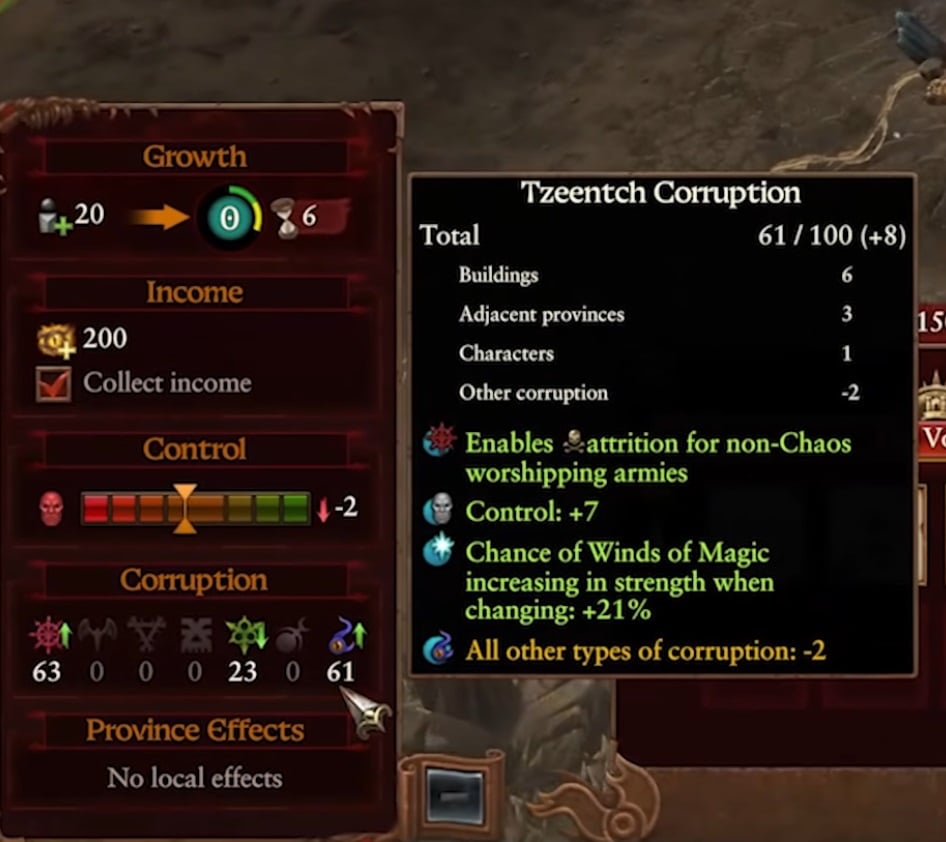
Each corruption type impacts the provinces and factions in unique ways, influencing Control (the rebranded Public Order), Growth, and other vital province statistics. For instance, a faction aligned with Khorne might find that Khorne corruption enhances their Control, while Nurgle corruption could impose negative effects on Growth due to attrition and weakening public order.
Corruption spreads through various means including buildings, the presence of armies, the actions of heroes, special events, and through battles—particularly during siege operations.
How to Deal with Growing Corruption
Here are strategic recommendations for managing and leveraging corruption within your provinces:
1. Build Corruption-Reducing Structures:
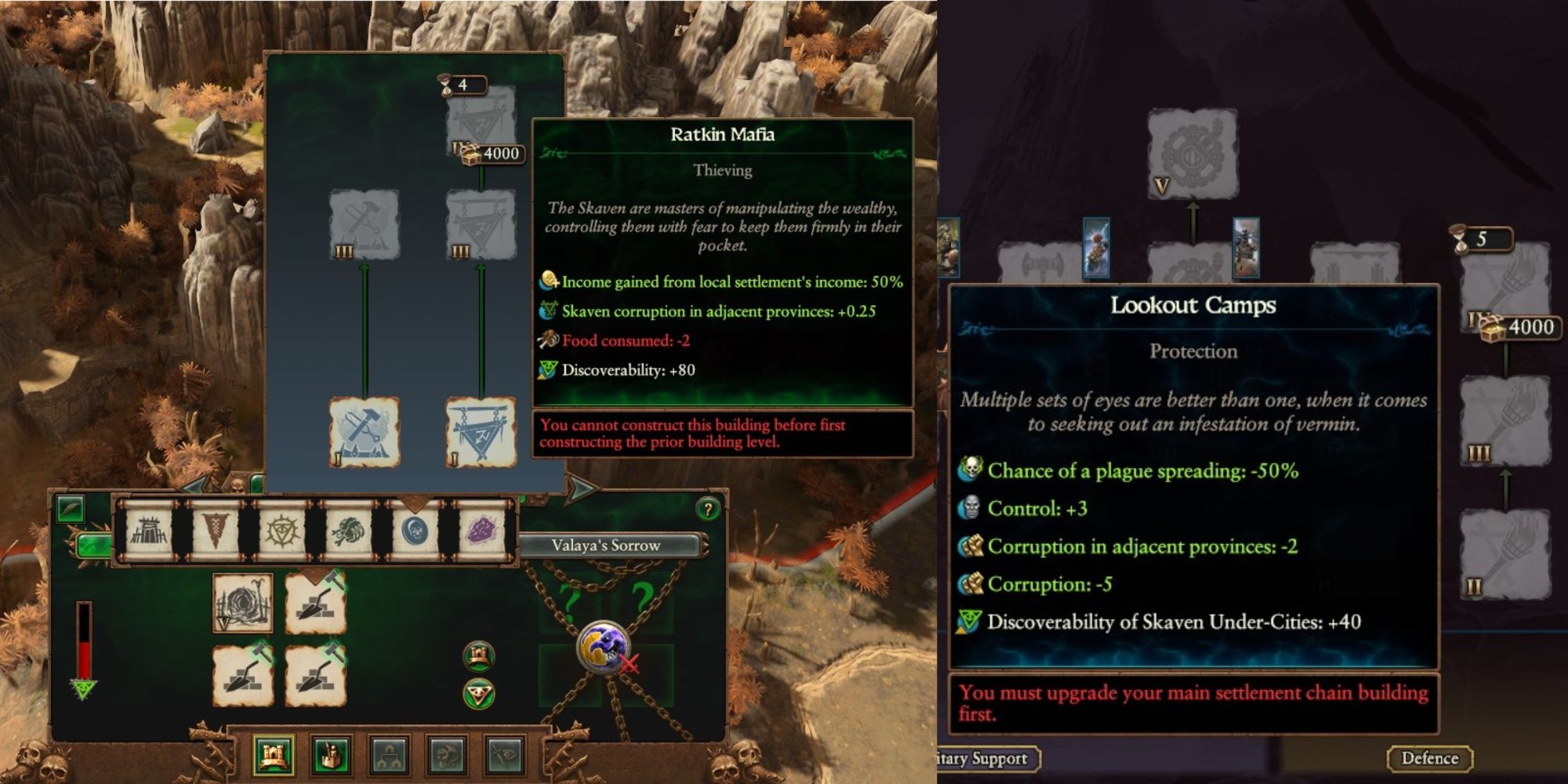
Invest in buildings that specifically reduce corruption. Many factions have access to such structures which can help mitigate the spread of unwanted corruption types and maintain stability in your provinces.
2. Use Your Own Corruption to Your Advantage:
If you’re playing a Chaos faction aligned with a specific god, focus on spreading that particular corruption, as it aids your faction by enhancing Control and providing various bonuses. This way, you can strengthen your hold while undermining local opponents.
3. Exploit Corruption Interaction:
Corruption types have interaction features; for example, Skaven corruption can diminish all other corruption types within the same area. By spreading a specific corruption type, you can effectively undermine enemy influences.
4. Deploy Heroes and Lords:
Use heroes and lords with abilities to spread your corruption or manage Control effectively. Their presence can be instrumental in mitigating adverse effects, targeting enemy corruption, or bolstering your own provinces against external threats.
5. Manage Adjacent Province Corruption:
Because corruption can spread beyond its origins, it is strategic to control adjacent territories. Ensure that nearby provinces are protected or influenced to prevent the encroachment of hostile corruption.
6. Address Specific Corruption Effects:
Familiarize yourself with the specific drawbacks of each type of corruption. For instance, Nurgle corruption causes attrition, so boost garrisons or construct additional defenses in highly contaminated zones to maintain control.
7. Focus on Increasing Control:
Since corruption heavily impacts Control, balance your provinces by constructing public buildings, enacting beneficial edicts, and deploying agents to enhance Control against the detrimental influences of corruption.
Summary
To effectively manage corruption in Total War: Warhammer III:
– Actively spread your faction’s own corruption to harness its benefits while suppressing enemy corruption.
– Construct buildings that reduce corruption and utilize heroes or lords to exert influence.
– Take advantage of the interactions between different corruption types and manage corruption spread in adjacent provinces.
– Prioritize Control in your territories by implementing strategic infrastructure and military measures.
By employing these strategies, you can effectively combat the destabilizing effects of corruption and maintain a robust, secure realm amidst the chaos of the Warhammer universe.

Leave a Reply